3 Ankle Mobility Drills For Better Squats.
Many people struggle to squat deeply without their heels lifting, knees caving, or their back rounding — and most don’t realize the real issue often begins at the ankle. When your ankles feel stiff, your body compensates, which makes squatting harder, less stable, and far less comfortable than it should be. That’s why building better ankle mobility is one of the quickest ways to improve your squat depth and form.
In this guide from Physiopros Performance Rehab, you’ll learn three practical mobility drills we teach every week: a deep squat stretch to open the calves and hips, a single-leg heel raise in a lunge position to build strength through range, and an ankle dorsiflexion drill with a band to help the joint glide smoothly. Each one takes only a few minutes and fits easily into your warm-up or daily routine. And because we treat active adults, lifters, and athletes here in Parsippany, NJ, these drills were chosen for how well they improve control and movement where it matters most.
If your squats feel stiff or restricted, these exercises are the ideal place to start.
Why Ankle Mobility Matters for Squats
Your ankles play a much bigger role in squatting than most people realize. To reach solid depth and maintain good form, you need enough dorsiflexion—the ability to bend your ankle so your knee can move forward over your toes. When this motion is limited, the rest of your body tries to make up for it, often in ways that create discomfort or poor mechanics.
With stiff ankles, you might notice your heels lifting, your knees collapsing inward, or your torso leaning too far forward. Over time, these compensations can place extra stress on your knees, hips, or lower back, making the squat feel awkward or even painful. On the other hand, when your ankles move well, your body can stay balanced and controlled throughout the entire squat.
Improving ankle mobility helps you:
Squat deeper and more comfortably
Keep your heels grounded
Maintain better alignment through your knees and hips
Reduce strain on your lower back
Improve performance in strength training and sports
Simply put, strong and mobile ankles set the foundation for better squats—and the three drills in this guide are designed to help you get there safely and efficiently.
How to Know If You Have Limited Ankle Mobility
Before jumping into drills, it helps to know whether ankle stiffness is actually the thing holding your squat back. Luckily, you can check your mobility in just a few seconds.
The Quick Wall Test
This simple test gives you a clear idea of how well your ankles move:
Stand facing a wall with one foot about 3–4 inches away.
Drive your knee forward toward the wall without letting your heel lift.
Keep your foot straight and your arch stable as you move.
What you should feel: a smooth forward motion with a mild stretch in the calf.
What indicates stiffness:
Your heel pops up
Your knee can’t touch the wall
You feel a block or pinch in the front of your ankle
Your knee drifts inward to “cheat” the range
If any of these show up, the ankle is likely limiting your squat depth.
Common Signs of Tight Ankles During Squats
Even without the wall test, your squat may already be telling you what’s going on. Look for:
Heels lifting at the bottom
Knees collapsing inward
Torso folding forward
Difficulty keeping balance
Early depth “sticking point”
These patterns often point to limited dorsiflexion rather than weak legs or bad technique.
Who Typically Needs More Ankle Mobility?
You’re especially likely to benefit from mobility work if you’re:
A lifter struggling with squat depth
A runner with tight calves
An athlete in cleats (soccer, baseball, football)
Someone who sits most of the day
Recovering from previous ankle sprains or calf strains
If you recognize any of these signs, you’re in the right place—your ankles are probably ready for some focused mobility work.
The 3 Best Ankle Mobility Drills for Better Squats
These three drills target the exact motions your ankles need for smoother, deeper squats. They’re simple, effective, and easy to add to your warm-up or daily routine.
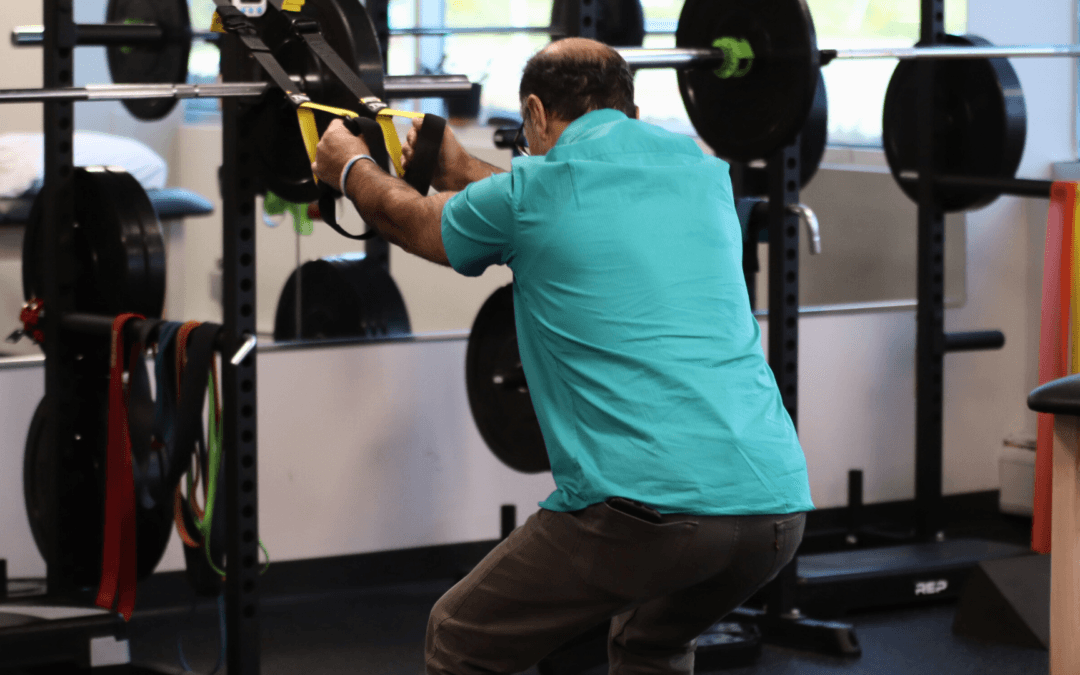
1. Deep Squat Stretch
Why it works:
This stretch opens the calves, achilles, and ankles while also helping your hips relax into a deeper squat. It mimics the bottom position of a squat and teaches your body how to move through more range without forcing it.
How to do it:
Stand with your feet shoulder-width apart.
Drop into a deep squat, keeping your heels on the ground.
Gently shift your weight from side to side to stretch each ankle.
Keep your chest tall and breathe slowly.
Dosage:
Hold for 20–30 seconds
Repeat 2–3 rounds
Common fixes:
If your heels lift, place them on small plates or a wedge.
If your hips feel tight, widen your stance slightly.
2. Single-Leg Heel Raise in a Lunge Position
Why it works:
This drill builds strength through your available ankle range. Strong calves and ankles make it easier to keep your heels grounded and your knees tracking properly during squats.
How to do it:
Step into a lunge with your front foot flat.
Keeping your knee bent, lift your front heel as high as you can.
Slowly lower it back down under control.
Keep your knee moving forward as the heel rises.
Dosage:
8–12 reps per side
Repeat 1–2 rounds
Common fixes:
Don’t rush—slow reps train the ankle better.
Keep the front knee aligned over the toes, not collapsing inward.
3. Ankle Dorsiflexion With Band
Why it works:
A resistance band helps the ankle joint glide properly. If you feel a pinch in the front of the ankle during squats, this mobilization often clears it up by improving how the joint moves.
How to do it:
Attach a light band to a sturdy anchor.
Loop the band around your ankle so it pulls backward.
Step forward into a deep knee bend while keeping your heel down.
Move slowly and breathe into the stretch.
Dosage:
8–10 controlled reps per side
Repeat 1–2 rounds
Common fixes:
Use a light band—strong bands limit mobility instead of improving it.
Keep your toes pointing straight ahead.
These three drills work together to improve flexibility, joint glide, and calf strength—all of which help you build better ankle mobility and a more comfortable squat.
How to Use These Drills in Your Squat Warm-Up
You’ll get the best results when you use these ankle mobility drills consistently and in the right order. Together, they prep your joints, stretch your calves, and activate the muscles that keep your heels grounded during squats.
Warm-up flow (5–7 minutes):
Deep Squat Stretch — opens the calves and ankles
Single-Leg Heel Raise in Lunge — strengthens through range
Band Dorsiflexion Mobilization — improves joint glide and reduces pinching
Use this sequence before your squat days, after long periods of sitting, or anytime your ankles feel stiff. Over time, you should notice smoother depth, better balance, and less strain on your knees and lower back.
Weekly frequency:
2–4 days per week for best results
More frequent, shorter sessions help mobility “stick” better than long, infrequent sessions
When Ankle Mobility Isn’t the Only Issue
Sometimes improving your squat isn’t just about freeing up your ankles. If your hips feel tight, your knees cave inward, or your torso folds forward even after consistent mobility work, the real issue may be somewhere else.
You may also need:
Hip mobility work to open the bottom of the squat
Core strength and bracing techniques for stability
Glute strengthening to improve knee tracking
Mid-back mobility for keeping the chest tall
If squat discomfort continues despite working on your ankles, a full movement assessment can help identify what’s holding you back and how to fix it.
FAQs
How long until I see results?
Some people feel a difference immediately, especially with the band mobilization. For deeper changes, expect noticeable progress within 2–4 weeks of regular practice.
Should these drills hurt?
You should feel a stretch or gentle pressure, not sharp pain. If you feel pinching, reduce the range or lighten the band tension.
Should I do these every day?
You can. Short, daily mobility sessions often help the ankle adapt more quickly.
Do I still need to squat with good technique?
Yes—better ankle mobility makes squatting easier, but good form reinforces the benefits.
Can these drills help knee pain during squats?
Sometimes. Tight ankles can force the knees to compensate, so improving mobility can reduce strain on the joint.
Local Expertise in Parsippany, NJ
At Physiopros Performance Rehab, we help active adults, lifters, and athletes move better with personalized treatment plans that address mobility, strength, technique, and recovery. Our one-on-one sessions often include:
Soft Tissue Mobilization
Cupping
IASTM
Dry Needling
Joint Mobilization and Manipulation
Strengthening and movement-specific coaching
Whether you’re trying to improve your squat depth, eliminate aches during training, or return to lifting after an injury, we can guide you through the right next steps.
Ready to Squat Better and Move With Confidence?
If your ankles feel stiff, your squats feel limited, or you want a personalized mobility plan:
Book a session at Physiopros Performance Rehab in Parsippany, NJ
📍3799 US-46, Suite 110, Parsippany, NJ 07054
Also, make sure to follow us on social media:
Instagram: https://www.instagram.com/physioprospt/?hl=en
Facebook: https://www.facebook.com/physioprospt0
TikTok: https://www.tiktok.com/@physioprospt?_t=8lfj7ogbgam&_r=1.
Strong ankles. Better squats. Better training.