
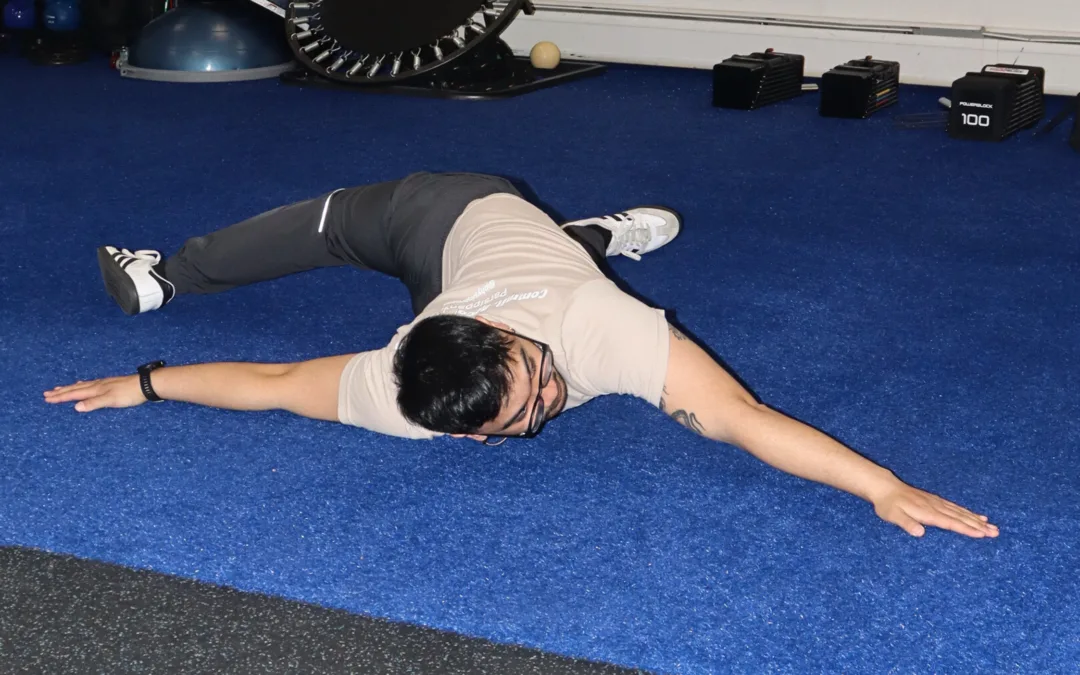
The Best Thoracic Mobility Exercises for People Who Sit All Day.
If you spend most of your day sitting at a desk, driving, or working on a computer, chances are your upper back feels stiff, tight, or rounded by the end of the day. Over time, long hours of sitting can limit movement through the mid-back, also known as the thoracic spine. When this area stops moving well, your neck, shoulders, and lower back often pick up the slack and that’s when discomfort starts to show up.
That’s where thoracic mobility exercises come in. Improving movement in the upper and mid-back helps restore better posture, reduce tension, and make everyday activities like reaching overhead or turning your head feel easier again. At Physiopros Performance Rehab in Parsippany, NJ, we regularly teach these exercises to desk workers and active adults who want to feel less stiff and move more comfortably throughout the day.
Why Thoracic Mobility Matters When You Sit All Day
The thoracic spine is designed to rotate, extend, and flex smoothly. However, prolonged sitting—especially with a forward head and rounded shoulders—gradually reduces that movement. As a result, other areas are forced to compensate.
When thoracic mobility is limited, you may notice:
Neck stiffness or frequent tension headaches
Shoulder tightness or pinching with reaching
Rounded posture that’s hard to “sit up straight” from
Lower back soreness after long days
Difficulty with overhead movements or workouts
By restoring motion to the thoracic spine, you reduce strain on surrounding joints and make it easier for your body to move the way it’s meant to.
Signs Your Thoracic Spine Is Stiff
You don’t need a formal assessment to notice thoracic stiffness. Common signs include:
Feeling “stuck” when trying to twist your upper body
Difficulty taking a deep breath into your ribs
Tightness between the shoulder blades
Neck or shoulder discomfort after sitting
Trouble maintaining upright posture without effort
If these sound familiar, adding thoracic mobility exercises to your routine can make a noticeable difference.
The Best Thoracic Mobility Exercises to Do Daily
These exercises are simple, low-impact, and easy to fit into your day—even if you don’t have much time.
Seated Thoracic Rotation
This exercise restores rotational movement through the upper back, which is often lost with prolonged sitting.
Sit tall in a chair with your feet flat on the floor. Cross your arms over your chest and slowly rotate your torso to one side while keeping your hips facing forward. Pause briefly, then return to center and rotate the other way.
Perform 8–10 slow rotations per side, focusing on smooth movement rather than forcing the range.
Thoracic Extension Over a Chair
This drill helps counteract rounded posture by encouraging extension through the mid-back.
Sit upright and place your hands behind your head. Gently lean back over the top of the chair, allowing your upper back to extend while keeping your lower back relaxed. Return to an upright position and repeat.
Complete 8–12 controlled repetitions, breathing out as you extend.
Open Book Stretch
The open book stretch improves both rotation and breathing through the rib cage.
Lie on your side with your knees bent and arms straight out in front of you. Slowly open your top arm toward the floor behind you, rotating your upper back while keeping your knees stacked. Follow your hand with your eyes, then return to the starting position.
Repeat 6–8 times per side, moving slowly and breathing deeply.
Cat-Cow for Thoracic Movement
While often thought of as a spine exercise overall, cat-cow is excellent for improving awareness and mobility in the thoracic region.
Start on your hands and knees. Slowly round your upper back toward the ceiling, then reverse the motion by gently extending your chest forward and lifting your head slightly. Move with your breath and avoid rushing.
Perform 10–12 slow repetitions.
How Often Should You Do Thoracic Mobility Exercises?
For people who sit most of the day, consistency matters more than intensity. Short, frequent sessions tend to work best.
Aim for:
5–10 minutes per day
At least 4–5 days per week
Light movement during work breaks when possible
Many people notice improved posture and reduced stiffness within a couple of weeks of regular practice.
When Thoracic Stiffness Isn’t the Only Issue
Sometimes thoracic tightness is only part of the picture. If you’re dealing with ongoing neck pain, shoulder discomfort, or recurring back issues despite regular mobility work, there may be strength, posture, or movement control factors involved as well.
In those cases, a personalized assessment can help identify what’s limiting your progress and how to address it more effectively.
Get Help Moving Better Throughout Your Workday
At Physiopros Performance Rehab in Parsippany, NJ, we help desk workers and active adults improve posture, mobility, and comfort with individualized physical therapy plans. Treatment often includes targeted thoracic mobility exercises, hands-on care, and strengthening strategies that carry over into daily life.
If sitting all day is leaving you stiff, sore, or frustrated, we’re here to help you move better and feel better long term.
Book a session at Physiopros Performance Rehab in Parsippany, NJ
📍3799 US-46, Suite 110, Parsippany, NJ 07054
Also, make sure to follow us on social media:
Instagram: https://www.instagram.com/physioprospt/?hl=en
Facebook: https://www.facebook.com/physioprospt0
TikTok: https://www.tiktok.com/@physioprospt?_t=8lfj7ogbgam&_r=1.