How Balance Therapy Helps Prevent Falls at Any Age.
A fall can happen in a split second. For example, you step off a curb too quickly. Or maybe you lose your footing on the stairs. Sometimes, you turn fast to grab something and feel yourself wobble. In most cases, people shake it off and move on—but in reality, those moments are often early warning signs that your balance system isn’t working as well as it should.
What many people don’t realize is that balance problems don’t only affect older adults. In fact, kids, athletes, busy professionals, and active adults of all ages can struggle with balance without realizing it. Ultimately, the difference between catching yourself and hitting the ground usually comes down to how well your body can react, stabilize, and adjust in real time.
This is exactly where targeted balance-focused physical therapy plays a role.
At Physiopros Performance Rehab, improving balance is a foundational part of how we help people move with more confidence and less risk. Rather than waiting for a fall or injury to happen, our approach instead emphasizes prevention—training your body to handle everyday movements safely and efficiently.
Throughout this article, we’ll explain how balance therapy works, why it continues to be one of the most effective ways to prevent falls, and how it can benefit people at every stage of life. Along the way, we’ll also walk through what balance therapy looks like in a physical therapy setting and help you determine who should consider it—even if they’ve never fallen before.
Why Falls Happen More Often Than People Think
Many people assume falls are random accidents. However, in reality, most falls happen for very specific reasons. More often than not, the body simply isn’t able to react fast enough, stabilize quickly enough, or recognize where it is in space.
Because of this, falls are usually linked to underlying movement issues rather than bad luck alone. Some of the most common contributors include:
Poor balance and coordination
Muscle weakness, especially in the hips and legs
Limited mobility in the ankles, hips, or spine
Previous injuries that were never fully rehabilitated
Slower reaction time
Fatigue or a lack of movement variety
It’s important to understand that balance is not just about standing still on one foot. Instead, it’s a complex skill that requires constant communication between your muscles, joints, nervous system, vision, and inner ear. When any part of that system isn’t working efficiently, the risk of losing your footing increases.
The encouraging part is this: balance is highly trainable. With the right approach and consistent practice, people can improve stability, reaction time, and overall confidence—often much faster than they expect.
What Is Balance Therapy?
Balance-focused rehabilitation is a specialized component of physical therapy designed to improve your ability to stay upright, recover quickly, and move safely through real-world situations.
Rather than focusing on isolated muscles, balance-focused care trains how your entire body works together. It challenges your nervous system to respond appropriately when your center of gravity shifts, the surface changes, or your environment becomes unpredictable.
In simple terms, balance-focused physical therapy helps your body:
Know where it is in space
React faster to unexpected movement
Create strength where stability is needed
Coordinate movements smoothly
This type of therapy is always individualized. A well-designed program looks very different for a young athlete compared to an older adult or someone recovering from surgery.
How It Prevent Falls
Balance training reduces fall risk by addressing the root causes, not just the symptoms. Here’s how it works.
1. Improves Body Awareness
Your body relies on constant feedback from your joints and muscles to know where you are. Balance therapy sharpens this awareness so your body can make faster, more accurate adjustments.
2. Strengthens Stabilizing Muscles
Falls often happen when stabilizing muscles don’t engage quickly enough. Balance therapy targets the hips, core, ankles, and legs to improve strength where it matters most.
3. Enhances Reaction Time
Life doesn’t happen in slow motion. Balance therapy includes reactive training so your body learns how to respond when something unexpected happens.
4. Trains Real-Life Movement
Standing still is rarely the problem. Falls usually happen during movement—walking, turning, reaching, or stepping on uneven surfaces. Balance therapy focuses on these real-world scenarios.
5. Builds Confidence
Fear of falling often leads to stiff, cautious movement, which actually increases fall risk. Balance therapy helps restore confidence so people move more naturally and safely.
Balance Therapy at Different Ages
Kids and Teens
Balance therapy helps improve coordination, body control, and injury prevention—especially for young athletes. It’s also helpful after injuries to ensure proper movement patterns develop early.
Adults (20s–50s)
Busy schedules, desk jobs, and old injuries can quietly affect balance. Balance therapy helps adults stay active, avoid recurring injuries, and move better in daily life and sports.
Older Adults
For older adults, balance therapy supports independence. It improves confidence with walking, stairs, and daily tasks while significantly reducing fall risk.
Balance Therapy vs. Doing Exercises at Home
Home exercises can be helpful, but they often miss key elements that make balance training effective.
In a physical therapy setting:
Exercises are progressed safely and appropriately
Form and movement quality are monitored
Training adapts as you improve
Real-life challenges are incorporated
Safety is prioritized without limiting progress
Without guidance, many people either don’t challenge themselves enough or push too far too fast. Balance therapy finds the right balance between safety and progress.
What Balance Therapy Looks Like at Physiopros
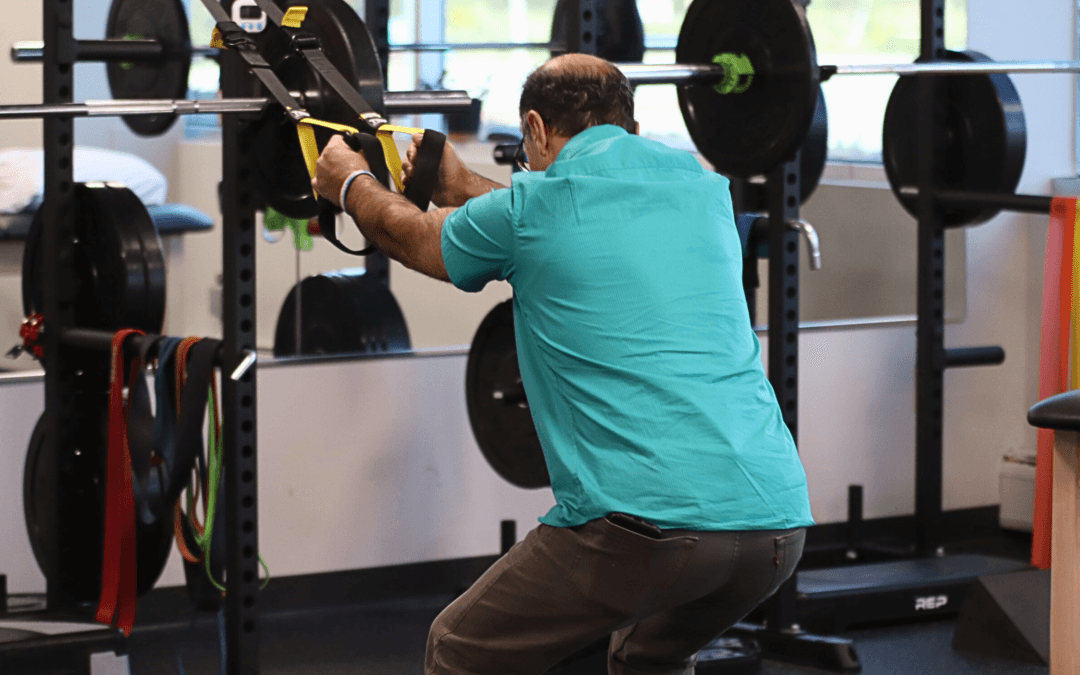
Balance therapy at Physiopros Performance Rehab starts with a thorough evaluation. We look at how you move, how you react, and how your body handles different challenges.
Your program may include:
Single-leg stability training
Controlled weight shifting
Dynamic balance exercises
Reactive and agility-based drills
Strength and mobility integration
As your balance improves, exercises are progressed to mimic real-life situations like uneven ground, quick direction changes, or multitasking movements.
How Often Do You Need Balance Therapy?
Most people benefit from balance therapy one to two times per week, depending on goals and needs. Improvements often show up within a few weeks, especially in confidence and control.
Long-term benefits include:
Reduced fall risk
Better movement efficiency
Increased confidence with daily activities
Lower risk of future injuries
Who Should Consider Balance Therapy?
You may benefit from balance therapy if you:
Have had a fall or near-fall
Feel unsteady or cautious with movement
Have a history of ankle, knee, or hip injuries
Play sports or want to stay active long-term
Want to prevent injuries before they happen
You don’t need to wait for a fall to take action.
FAQs
Q: Is balance therapy only for seniors?
A: Not at all. While it’s commonly associated with older adults, balance-focused physical therapy helps people of all ages. In fact, young athletes, active adults, and even kids can benefit from improving balance, coordination, and body control.
Q: Do I need a referral for balance therapy?
A: In many cases, you don’t. Direct access laws often allow patients to start physical therapy without a physician referral. That said, our team is always happy to help you understand your specific options and insurance requirements.
Q: How long does it take to improve balance?
A: For many people, noticeable improvements begin within a few weeks. However, progress depends on consistency, individual goals, and any underlying conditions. The more regularly you train, the better and more lasting the results tend to be.
Q: Can it help after surgery or injury?
A: Absolutely. Balance-focused rehabilitation is often a critical part of recovery after surgery or injury. Not only does it help restore confidence, but it also plays a major role in reducing the risk of future injuries.
Q: Is it covered by insurance?
A: Coverage can vary depending on your specific plan. Fortunately, our staff can help verify your benefits and walk you through what’s covered before you get started.
Ready to Improve Your Balance and Reduce Fall Risk?
Falls are not an inevitable part of aging or staying active. With the right training, your body can become stronger, more responsive, and more confident at any age.
If you’re in or around Parsippany, NJ and want to improve your balance, reduce fall risk, or move with more confidence, the team at Physiopros Performance Rehab is here to help.
Schedule a balance evaluation or call us today to see how balance therapy can support your long-term movement and health.
Book a session at Physiopros Performance Rehab in Parsippany, NJ
📍3799 US-46, Suite 110, Parsippany, NJ 07054
Also, make sure to follow us on social media:
Instagram: https://www.instagram.com/physioprospt/?hl=en
Facebook: https://www.facebook.com/physioprospt0
TikTok: https://www.tiktok.com/@physioprospt?_t=8lfj7ogbgam&_r=1.