Neck Pain Exercises for Desk Workers: A Practical Guide.
AUDIO VERSION
↓
If you spend long hours at a desk, you’re not alone—and neither is the neck stiffness that often comes with it. Many of our patients here at Physiopros Performance Rehab in Parsippany, NJ tell us the same thing: their workday feels fine, but the tightness, headaches, or sharp pinches that follow are a different story. Fortunately, small daily changes and the right neck pain exercises can make a real difference.
As you continue reading, you’ll learn why desk posture affects your neck more than you might think, how simple movements can reset your muscles throughout the day, and which practical exercises actually help. And because these strategies come straight from the same physical therapists who treat desk-related neck pain every week, you’ll get advice you can trust and start using today.
Whether you’re working from home, commuting into the office, or managing a mix of both, these tools will help you move with less tension, more control, and a lot more comfort. Let’s dive in and make your workday feel better than ever.
What Causes Neck Pain From Sitting All Day?
Neck pain from desk work doesn’t show up overnight. Instead, it builds slowly as small habits stack up throughout your day. When you sit for long periods—especially if your monitor sits too low or you lean toward your screen—your head naturally drifts forward. Although this shift seems minor, it places extra strain on the muscles that support your neck and upper back.
Over time, this posture creates a predictable pattern: the muscles in the front of your neck become weaker, while the muscles along your shoulders and the base of your skull become tight and overworked. As a result, even simple movements like turning your head or looking down at your phone can cause stiffness or sharp tension.
Additionally, many people in Parsippany, NJ and beyond deal with stress-related muscle guarding without realizing it. When your shoulders creep upward or your jaw tightens during the day, the tissues around your neck follow suit. This combination of poor posture, muscle imbalance, and tension is what sets the stage for ongoing discomfort.
The good news? Once you understand what’s driving the problem, you can start improving it. And that’s where targeted, easy-to-follow neck pain exercises come in. They help reset your posture, strengthen the right muscles, and reduce the strain you feel by the end of the day. Let’s take a look at the most effective ones.
The 5 Most Effective Neck Pain Exercises for Desk Workers
When it comes to easing desk-related tension, not all exercises work the same way. The best approach combines gentle stretching with activation of the muscles that support your neck and upper back. These movements are simple, require no equipment, and can be done right at your desk. More importantly, they address the common muscle imbalances that build up during long workdays.
Below are five highly effective exercises we often teach at Physiopros Performance Rehab. As always, move slowly, breathe normally, and stop if anything feels sharp or unusual.
1. Chin Tucks
This exercise helps realign your head over your shoulders by engaging the deep neck flexors—the small stabilizing muscles most people underuse.
How to do it:
- Sit tall with your eyes looking straight ahead.
- Gently pull your chin straight back (not down), as if making a double chin.
- Hold for 3–5 seconds, then relax.
- Try 10–12 slow reps.
Common mistake: Pushing your head backward. Keep the motion subtle and controlled.
2. Upper Trap Stretch
When your shoulders slowly creep upward throughout the day, the upper trapezius can become stiff. This stretch helps release that tension.
How to do it:
- Sit upright and gently tilt your ear toward one shoulder.
- Use your hand to apply a light stretch if needed.
- Hold for 20–30 seconds, then switch sides.
Tip: Keep the opposite shoulder relaxed and down.
3. Levator Scap Stretch
This muscle runs from your shoulder blade to your neck and often gets irritated with forward head posture.
How to do it:
- Turn your head 45 degrees toward one armpit.
- Gently nod downward as if looking into your pocket.
- Hold 20–30 seconds and repeat on the other side.
Where you should feel it: Along the back and side of the neck.
4. Scapular Retraction (Shoulder Blade Squeeze)
Because slouching weakens the mid-back muscles, this activation exercise restores balance and improves posture.
How to do it:
- Sit or stand tall.
- Squeeze your shoulder blades back and down.
- Hold for 5 seconds, repeat 10–12 times.
Keep in mind: Avoid shrugging—your shoulders should stay low.
5. Thoracic Extension Over a Chair
When the upper back stays rounded, the neck compensates. Opening the thoracic spine can noticeably reduce neck pressure.
How to do it:
- Sit in a chair with a firm back.
- Place your hands behind your head.
- Lean your upper back gently over the top of the chair, lifting your chest.
- Hold for a moment, then return to upright.
- Try 8–10 slow repetitions.
Why it matters: A mobile upper back makes it easier for your neck muscles to relax.
Daily Habits That Boost Your Results
While the right exercises can make a noticeable difference, your daily habits are what help those improvements stick. Fortunately, you don’t need a full ergonomic overhaul to support your neck—you just need a few small adjustments that fit into your normal routine. When combined with the exercises above, these habits can significantly reduce tension during long workdays.
1. Set Up Your Workstation the Right Way
A few simple tweaks can take a lot of extra stress off your neck:
- Raise your monitor so the top third of the screen is at eye level.
- Keep your keyboard and mouse close enough to avoid reaching forward.
- Sit with your hips slightly higher than your knees to reduce slouching.
These changes help your neck stay in a more neutral, relaxed position throughout the day.
2. Take Micro-Breaks Every 30–45 Minutes
Even perfect posture becomes stressful if you hold it too long. Brief, intentional movement resets your muscles and helps restore circulation. Standing, walking for a minute, or doing a quick stretch can go a long way—especially if you work in a busy office here in Parsippany, NJ or spend long hours on a computer.
3. Watch Your Breathing and Shoulder Tension
People often tense their shoulders when stressed or focused. By taking slow, relaxed breaths and consciously lowering your shoulders during the day, you can interrupt that cycle of tightness.
4. Stay Active Outside of Work
Regular exercise—whether it’s strength training, yoga, walking, or a fitness class—supports overall posture and reduces the strain that builds up from sitting. When the rest of your body moves well, your neck doesn’t have to work as hard.
5. Use Your Phone at Eye Level
Lowering your head to look at your phone adds extra load to the muscles that are already irritated. Bringing the screen up—even slightly—can make a big difference by the end of the day.
When These Exercises Aren’t Enough
Although the exercises and daily habits above can make a meaningful difference, there are times when neck pain needs a more personalized approach. Desk-related tension can be stubborn, and if the underlying issue isn’t addressed, it may linger despite your best efforts.
You may benefit from a professional assessment if you notice any of the following:
- Numbness, tingling, or radiating discomfort into the shoulder, arm, or hand
- Headaches that continue even after stretching or changing your posture
- Sharp or persistent pain with basic movements like turning your head
- Stiffness that never fully loosens up, even with consistent exercises
- Little to no improvement after two to three weeks of doing these movements regularly
These signs don’t necessarily mean something serious is wrong. Instead, they often indicate that certain joints, nerves, or muscles need more targeted attention than what general exercises can provide. A trained physical therapist can pinpoint the exact source of the problem and tailor a plan to your specific movement patterns, work setup, and lifestyle.
Here in Parsippany, NJ, we see this all the time—patients try to fix their discomfort on their own but don’t get full relief until someone evaluates how their neck, shoulders, and upper back work together. With the right guidance, most people experience noticeable progress much faster.
Next, we’ll break down how physical therapy builds on the exercises you’ve already tried and helps you move toward lasting, comfortable mobility.
How Physical Therapy Helps Desk-Related Neck Pain
When exercises and posture tweaks aren’t giving you the relief you hoped for, physical therapy can bridge the gap. At Physiopros Performance Rehab, we take a deeper look at how your body moves, where your muscles are compensating, and which specific joints are contributing to your discomfort. This creates a clear, personalized roadmap—something most people can’t get from generic online routines.
1. Hands-On Techniques That Reduce Tension Quickly
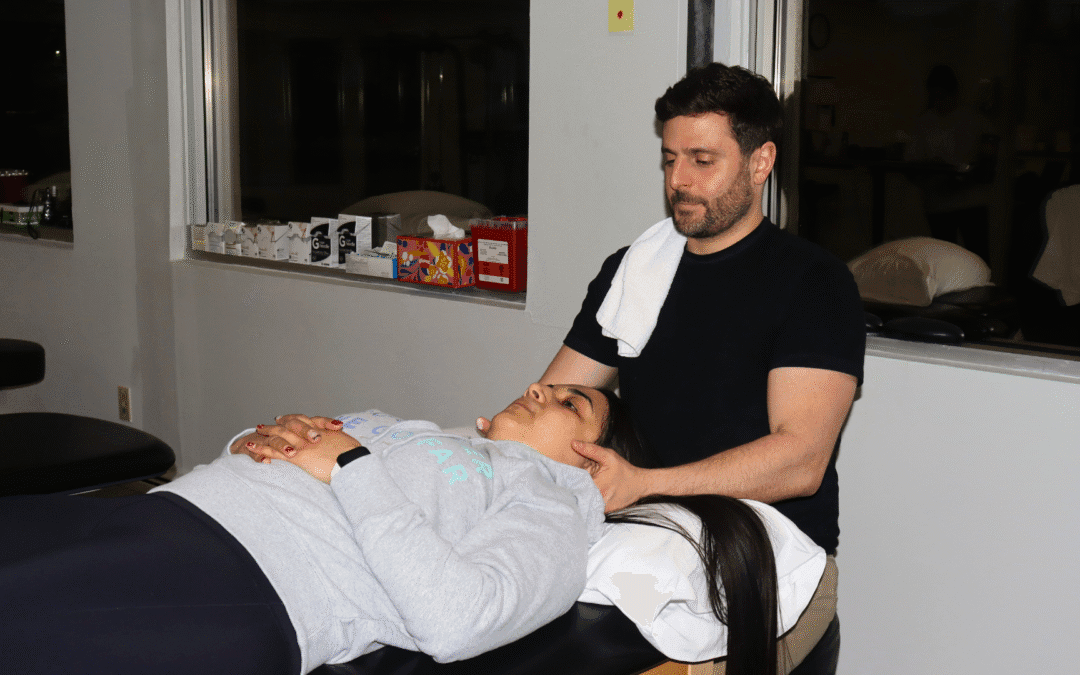
Many desk workers develop tightness in the upper traps, levator scapulae, or the joints at the base of the neck. Through techniques like soft tissue mobilization, joint mobilization, cupping, or dry needling (when appropriate), we help calm irritated tissues and restore normal mobility. These strategies reduce pain efficiently so you can get more out of your exercises.
2. Strengthening That Targets the Real Problem
A major reason neck pain returns is because the right muscles aren’t doing their job. We assess the deep neck flexors, shoulder blade stabilizers, and mid-back muscles to create a strengthening plan that fits your body—not someone else’s. This balance is what helps you maintain good posture without thinking about it all day.
3. Movement Coaching and Posture Training
Instead of telling you to “sit up straight,” we teach you how to move in ways that feel natural and sustainable. Small adjustments—how you turn your head, lift your shoulders, or position your screen—can completely change how your neck feels by the end of the week.
4. Ergonomic Guidance Tailored to Your Workspace
Whether you work in an office in Parsippany, NJ or from a home setup, we help you fine-tune your desk so your neck and shoulders don’t have to fight against poor positioning. These changes are often simple but incredibly effective.
5. Long-Term Prevention and Flare-Up Management
Our goal isn’t just to get you out of pain—it’s to keep you out of pain. We build a plan for flare-ups, busy weeks, travel, and long workdays so you always know what to do if tension creeps back in.
Ready to Finally Get Rid of Your Neck Pain?
If you’ve been dealing with nagging stiffness, tension after long workdays, or discomfort that keeps coming back, you don’t have to figure it out on your own. The neck pain exercises in this guide are a great place to start, but a personalized plan can make all the difference—especially if you’ve been struggling for weeks or months.
At Physiopros Performance Rehab in Parsippany, NJ, our team specializes in helping desk workers move better, feel better, and get back to their routines without pain holding them back. We’ll take the time to understand your symptoms, evaluate how your neck and upper back are moving, and create a treatment plan that fits your daily life.
Here are three easy ways to take the next step:
- Schedule a full physical therapy evaluation to get a personalized plan
- Request a free phone consult if you’d like to talk through your symptoms first
- Stop by our clinic if you’re nearby and want to ask a quick question
You don’t have to settle for tight shoulders, daily headaches, or a stiff neck that slows you down. With the right approach, you can feel better—at work, at home, and everywhere in between.
We’re here to help you get there.
👉 Book Your Appointment Today or call (973) 265-8621 to schedule your first one-on-one session. Also, make sure to follow us on social media:
Instagram: https://www.instagram.com/physioprospt/?hl=en
Facebook: https://www.facebook.com/physioprospt0
TikTok: https://www.tiktok.com/@physioprospt?_t=8lfj7ogbgam&_r=1.
Experience what real, personalized physical therapy feels like, because at Physiopros, your success is our mission.
Submit a Comment