Why One-on-One Physical Therapy Gets Better Results
Most people do not come to physical therapy because they want a generic exercise sheet.
They come because something is getting in the way of their life.
Maybe your knee hurts when you squat. Maybe your shoulder bothers you during workouts. Maybe your back tightens up after sitting all day. Maybe you’re an athlete trying to return to your sport, but you still don’t feel confident.
Whatever brought you here, one thing matters: your care should be specific to you.
That’s where one-on-one physical therapy makes a difference.
At Physiopros Performance Rehab in Parsippany, NJ, we believe physical therapy should be personalized, movement-based, and built around your goals. Instead of following a cookie-cutter program, your therapist takes the time to understand how you move, what you need, and what you want to get back to doing.
What Is One-on-One Physical Therapy?
One-on-one physical therapy means your care is centered around individualized attention and a plan built specifically for your body.
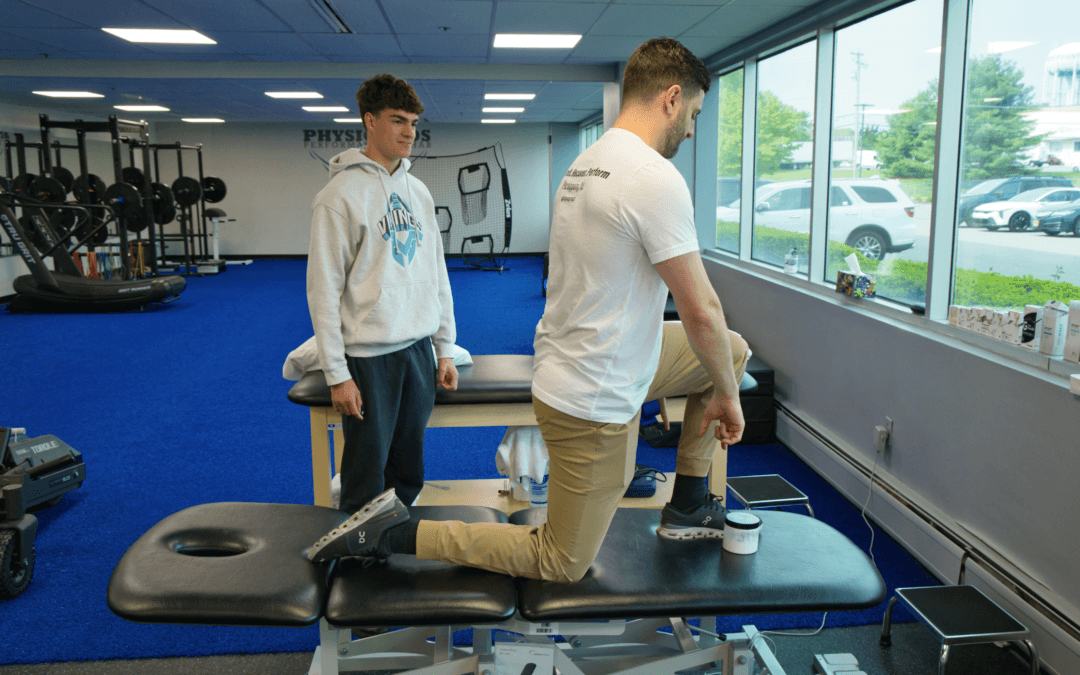
Instead of being placed into a generic routine, you work closely with a licensed physical therapist who evaluates your symptoms, movement, strength, mobility, and goals. A trained aide may also assist as needed during your session, but your treatment plan is guided by your physical therapist and adjusted based on how your body responds.
A session may include:
- Movement assessment
- Strength testing
- Mobility testing
- Manual therapy
- Dry needling
- Cupping
- IASTM or Graston-style techniques
- Corrective exercise
- Strength training
- Gait or lifting analysis
- Home exercise education
However, the real value is not just the treatments themselves. The value comes from choosing the right combination for you.
Why Personalized Care Matters
No two people move exactly the same way.
Even if two patients have the same diagnosis, their treatment plans may look completely different. For example, two people with knee pain may both feel discomfort when squatting. However, one person may need more hip strength, while the other may need better ankle mobility, improved quad control, or a change in training volume.
That is why a personalized plan matters.
A diagnosis tells part of the story. Your movement tells the rest.
With one-on-one physical therapy, your therapist can look beyond the painful area and assess the full picture. Instead of only asking where it hurts, they look at how your body moves, what activities trigger symptoms, and what needs to improve for long-term progress.
Better Evaluations Lead to Better Results
A strong physical therapy plan starts with a strong evaluation.
During a one-on-one evaluation, your therapist has time to understand your history, assess your movement, test strength, and identify the factors contributing to your symptoms.
This matters because pain is rarely caused by one thing.
For example, shoulder pain may involve the rotator cuff, shoulder blade control, upper-back mobility, training technique, or workload. Hip pain may involve glute strength, core stability, walking mechanics, or recovery habits.
Without a detailed assessment, it is easy to guess.
With a personalized evaluation, your care becomes more accurate from the start.
One-on-One Physical Therapy Avoids Cookie-Cutter Rehab
Many people have had the frustrating experience of doing the same basic exercises over and over without knowing why.
A few band walks. A few stretches. Maybe some light strengthening. Then the same thing next visit.
Sometimes those exercises are helpful. However, if they are not tied to your specific goals or adjusted as you improve, progress can stall.
One-on-one physical therapy helps avoid that problem because your plan evolves.
As your pain decreases, strength improves, and movement changes, your therapist can progress your exercises. That may mean increasing resistance, improving control, adding balance, changing tempo, or building toward sport-specific movements.
Rehab should not feel random. It should feel like a clear path from where you are now to where you want to be.
Better Attention Means Better Exercise Quality
Exercise only works if you do it well.
That does not mean every movement has to look perfect. However, it does mean the right muscles should be doing the right job at the right time.
This is one of the biggest benefits of one-on-one physical therapy.
Your therapist can watch how you move and make small corrections that completely change the exercise. A slight foot position change, better hip hinge, improved shoulder blade control, or more controlled tempo can make an exercise far more effective.
These details matter because your body learns through repetition. When you practice better movement with guidance, you build confidence and control.
One-on-One Care Builds Better Communication
Good physical therapy is not just about exercises and treatment techniques. It is also about communication.
You should understand why you are doing each exercise. You should know what progress looks like. You should know what to do at home. You should also know when to push, when to modify, and when to back off.
One-on-one care gives your therapist more opportunity to explain the plan and adjust it based on your feedback.
That matters because recovery is not always linear. Some days feel great. Other days feel frustrating. When your therapist knows you well, they can help you understand what your body is telling you.
Why Active Adults Benefit From Personalized PT
Active adults usually do not just want pain relief. They want to stay capable.
They want to lift, run, golf, hike, play pickleball, work out, garden, travel, or keep up with their family without constantly worrying about flare-ups.
That requires more than temporary relief.
It requires capacity.
Capacity means your body can handle the demands you place on it. One-on-one physical therapy helps build that capacity by improving:
- Strength
- Mobility
- Balance
- Coordination
- Load tolerance
- Movement quality
- Confidence with activity
Instead of telling you to stop doing everything you enjoy, a good physical therapy plan helps you return gradually and intelligently.
Why Athletes Need Individualized Rehab
Athletes need rehab that matches the demands of their sport.
A runner, golfer, basketball player, baseball player, and weightlifter all need different things from their body. Even within the same sport, each athlete may have different weaknesses, movement habits, injury history, and performance goals.
That is why one-on-one physical therapy is so valuable.
Your therapist can build a plan that connects rehab to performance. Early on, that may mean reducing pain and restoring mobility. Then, as you improve, the plan may shift toward strength, power, agility, plyometrics, running mechanics, or sport-specific drills.
For athletes, the goal is not just to feel better during daily life. The goal is to feel confident when your sport demands speed, control, strength, and reaction.
Why Desk Workers Need More Than Posture Advice
If you sit at a desk for hours, you have probably been told to “fix your posture.”
While posture can matter, it is rarely the whole solution.
Desk-related discomfort often comes from a combination of limited movement, muscle endurance issues, stiffness, stress, and repetitive positioning. Sitting perfectly all day is not realistic for most people. Instead, your body needs more movement options and better tolerance.
A personalized plan may include:
- Thoracic mobility exercises
- Neck and shoulder endurance work
- Hip mobility drills
- Core strengthening
- Micro-break strategies
- Ergonomic adjustments
The goal is not perfect posture. The goal is a body that handles your workday better.
Hands-On Care Works Best With Movement
Many patients love hands-on care because it can help them feel better quickly.
Manual therapy, soft tissue mobilization, joint mobilization, cupping, dry needling, IASTM, and traction therapy can all be useful when used appropriately.
However, hands-on care works best when it supports movement.
At Physiopros, hands-on treatment is often used to create a window of opportunity. Then we use mobility work, strengthening, and movement retraining to help your body hold onto the progress.
In other words, relief is helpful. But better movement makes it last.
Strength and Mobility Create Long-Term Progress
Many people think physical therapy is mostly stretching or light exercises.
In reality, strength is often one of the biggest missing pieces.
When an area hurts, the surrounding muscles may become weaker, less coordinated, or less confident. Over time, your body may compensate without you realizing it.
One-on-one physical therapy helps identify where strength is lacking and how to rebuild it safely.
Mobility also matters. Mobility is your ability to move through a range of motion with control. If your ankle mobility is limited, your squat may feel restricted. If your hip mobility is limited, your back may compensate. If your upper back is stiff, your shoulders may work harder than they should.
When strength and mobility improve together, movement usually feels smoother, stronger, and more natural.
Injury Prevention Starts With Better Awareness
One-on-one physical therapy is not only for people who are currently injured.
It can also help people reduce their risk of future issues.
Many injuries develop gradually. Small limitations in strength, mobility, balance, or movement quality can build up over time. Eventually, the body reaches a point where it can no longer tolerate the same workload.
A physical therapist can help identify these issues before they become bigger problems.
For example:
- A runner may need better hip control.
- A lifter may need better bracing.
- A golfer may need better rotation.
- A desk worker may need better shoulder endurance.
- An athlete may need better landing mechanics.
By improving movement awareness, personalized physical therapy helps you build a stronger foundation.
What to Expect at Physiopros Performance Rehab
At Physiopros Performance Rehab in Parsippany, NJ, we take the time to understand what brought you in and what you want to get back to doing.
Your first visit is not just about where it hurts. It is about how your body moves, what your daily life looks like, and what goals matter most to you.
Depending on your needs, your plan may include:
- Physical therapy evaluation
- Manual therapy
- Dry needling
- Cupping therapy
- IASTM or Graston technique
- Traction therapy
- Mobility routines
- Strength training
- Gait analysis
- Sport-specific rehab
- Injury prevention education
Throughout the process, your therapist guides your care and adjusts the plan as you improve.
The goal is simple: help you move better, feel better, and return to the activities that matter to you.
Signs You May Benefit From One-on-One Physical Therapy
You may benefit from a personalized physical therapy plan if you notice:
- Pain that keeps returning
- Stiffness that does not improve with stretching
- One side feeling weaker or tighter than the other
- Trouble returning to workouts or sports
- Pain during lifting, running, squatting, or reaching
- Limited mobility
- Recurring flare-ups
- Frustration after trying generic exercises
- Uncertainty about what your body needs
You do not need to wait until pain becomes severe to get help. Getting evaluated early can help you make faster, clearer progress.
Common Myths About One-on-One Physical Therapy
Myth 1: Physical therapy is only for injuries
Physical therapy can help with injuries, but it can also improve movement, performance, mobility, strength, balance, and confidence.
Myth 2: All PT clinics are basically the same
The experience can vary a lot. The quality of the evaluation, the amount of individual attention, and the way exercises are progressed all affect your results.
Myth 3: If pain goes away, the problem is fixed
Pain relief is important, but it does not always mean your body is ready for full activity. Strength, mobility, control, and load tolerance still matter.
Myth 4: One-on-one physical therapy is only for athletes
Athletes benefit from individualized care, but so do active adults, desk workers, older adults, post-surgical patients, and anyone who wants a more personalized plan.
Final Thoughts
One-on-one physical therapy gets better results because it treats you like a person, not a diagnosis.
Your pain, movement, lifestyle, goals, and concerns all matter. When your therapist has time to assess those details, your plan becomes more specific, more effective, and easier to follow.
At Physiopros Performance Rehab in Parsippany, NJ, we believe physical therapy should be movement-based, performance-focused, and built around you.
You deserve more than a generic plan.
You deserve care that actually fits your body.
Ready for a More Personalized Physical Therapy Experience?
If you’re dealing with pain, stiffness, recurring injuries, or movement limitations, our team can help you figure out what’s really going on.
Book a session at Physiopros Performance Rehab in Parsippany, NJ.
Call Physiopros Performance Rehab at (973) 265-8621 or request an appointment by clicking here.
Also, make sure to follow us on social media:
Instagram: https://www.instagram.com/physioprospt/?hl=en
Facebook: https://www.facebook.com/physioprospt0
TikTok: https://www.tiktok.com/@physioprospt?_t=8lfj7ogbgam&_r=1.