Return To Sport Testing
Sports Testing in Parsippany, NJ
Getting back to sport should not be based on guessing. Return To Sport Testing at Physiopros Performance Rehab helps athletes and active individuals understand whether their body is ready for training, competition, and high-level movement. Using objective testing, sport-specific movement analysis, strength testing, range of motion testing, anthropometrics, and VALD ForceDecks, we help identify what looks strong, what needs work, and what should come next.
What Is Return To Sport Testing?
Return To Sport Testing is a structured assessment used after injury, surgery, rehab, or time away from sport. Instead of only asking if you feel better, we measure how your body moves, produces force, absorbs impact, and handles sport-specific demands. Testing may include strength, mobility, jumping, landing, balance, power, limb symmetry, and sport-specific movement.
Who Is This For?
Return To Sport Testing may be helpful for athletes recovering from:
- ACL injuries
- Knee injuries
- Ankle sprains
- Hip injuries
- Shoulder injuries
- Muscle strains
- Tendon injuries
- Post-surgical rehab
- Overuse injuries
- Sports-related pain
This service can be used for soccer, football, basketball, baseball, lacrosse, volleyball, wrestling, pickleball, tennis, CrossFit, powerlifting, running, dance, martial arts, and more.
Why Return To Sport Testing Matters
Feeling better does not always mean your body is fully ready.
Pain may be gone, but strength, mobility, balance, power, confidence, or landing mechanics may still need work.
Return To Sport Testing helps answer:
- Is my injured side as strong as my other side?
- Am I landing evenly?
- Do I have enough power?
- Is my range of motion where it needs to be?
- What should I keep working on?
What We Test
Sports Specific Testing
Every sport demands something different.
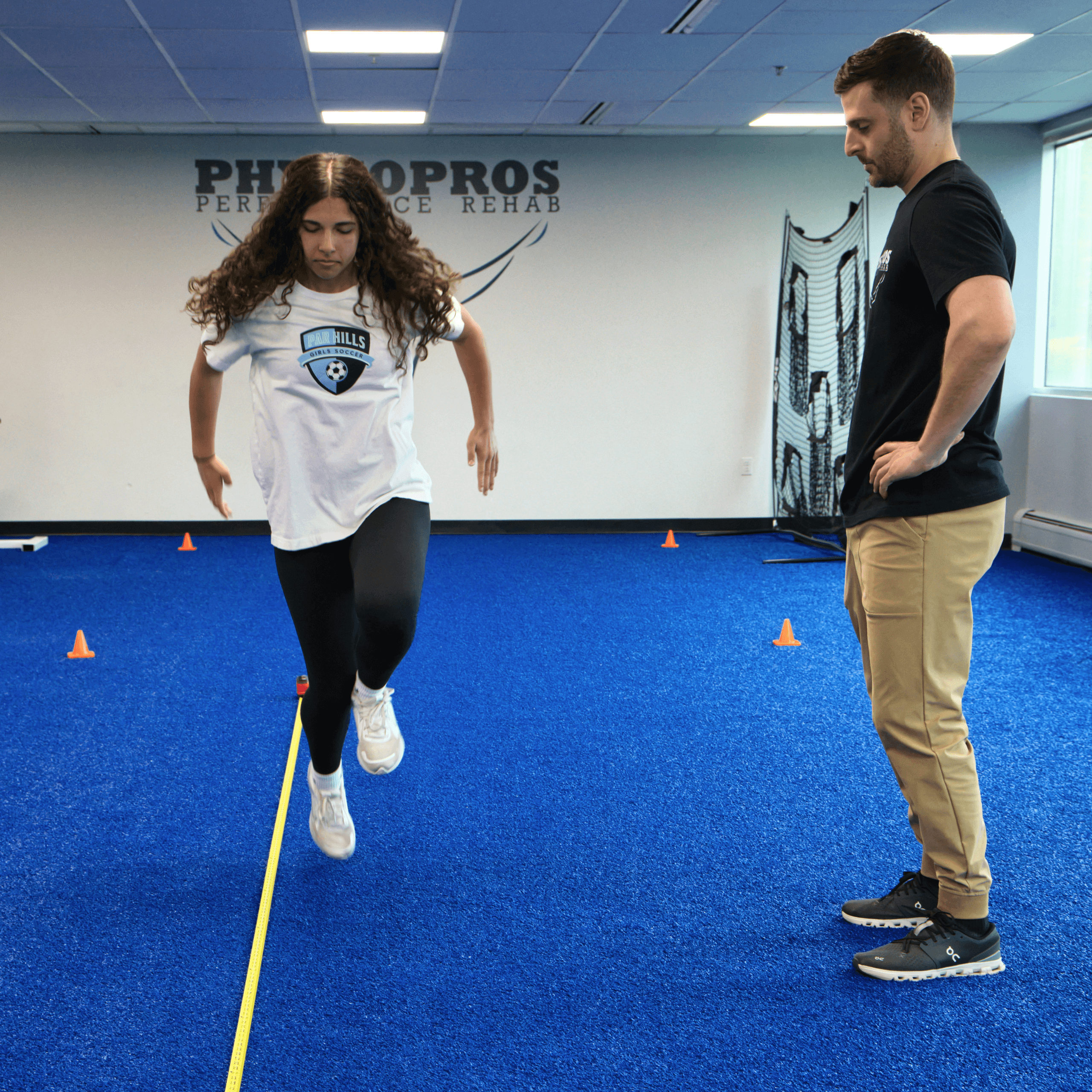
Your testing may include jumping, landing, cutting, deceleration, acceleration, change of direction, squatting, lunging, hopping, rotational movements, or sport-specific drills.
The goal is to test movements that actually matter for your sport.
Dynamometer Strength Testing
Dynamometer testing measures how much force specific muscles can produce.
This helps us compare sides and identify strength deficits that may not be obvious by feel alone.
We may test the quads, hamstrings, glutes, hips, calves, rotator cuff, shoulder stabilizers, grip strength, or other key muscle groups based on your sport and injury.
Range of Motion Testing
Range of motion testing measures how well your joints move.
If one side is limited, your body may compensate during running, jumping, cutting, lifting, throwing, or landing.
We may assess the ankles, knees, hips, spine, shoulders, elbows, or wrists depending on your needs.
Anthropometrics
Anthropometrics are body measurements that give us more context during testing.
This may include height, weight, limb length, limb circumference, side-to-side size differences, or other measurements related to your sport, injury, and progress.
VALD ForceDecks Testing
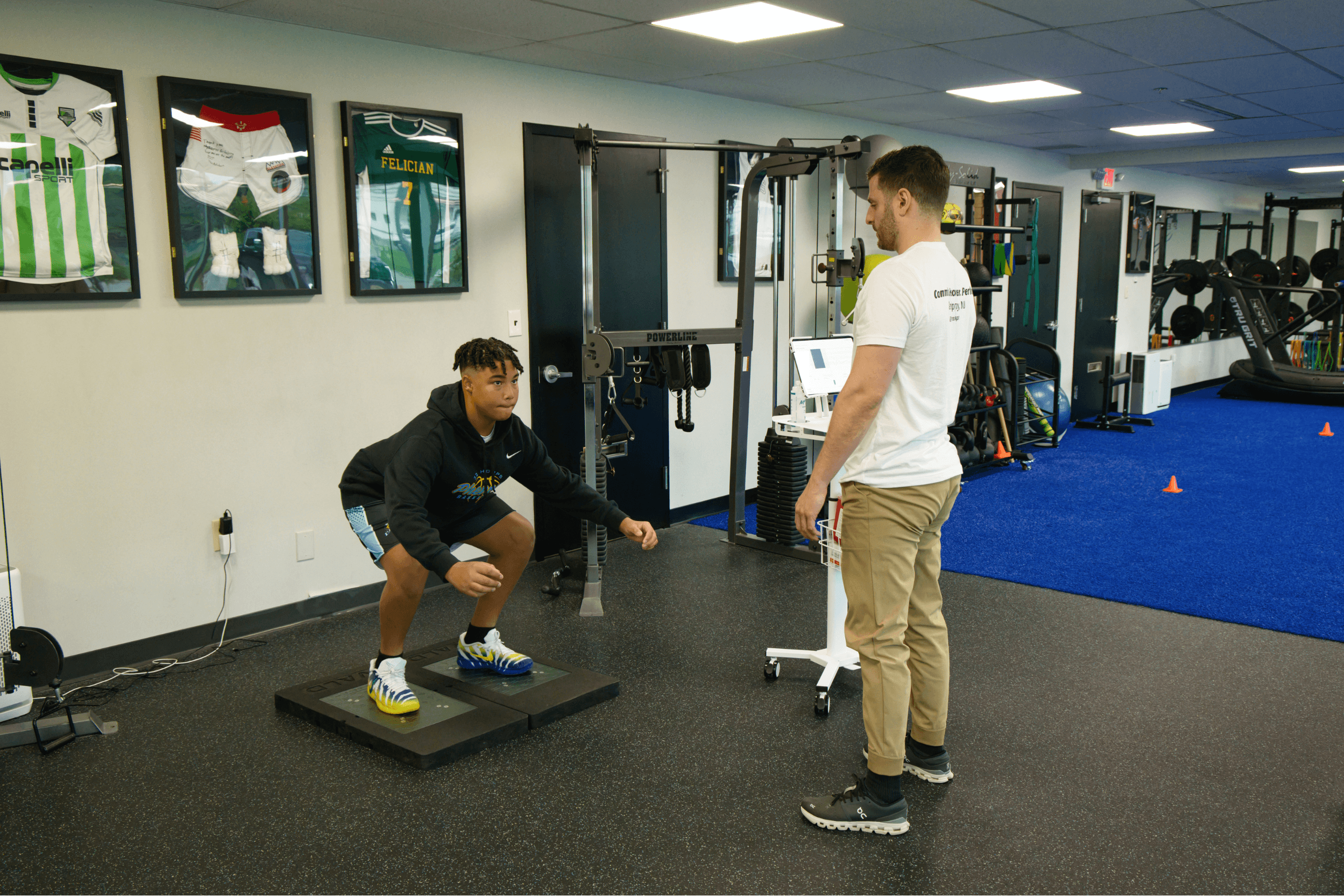
VALD ForceDecks are force plates that measure how your body produces, absorbs, and distributes force.
ForceDecks may help assess jump height, peak force, power output, landing strategy, left-right asymmetry, balance, rate of force development, force distribution, and isometric strength.
This is especially useful for athletes returning from lower-body injuries, ACL rehab, ankle sprains, hip injuries, or performance-related limitations.
What ForceDecks Can Show Us
ForceDecks can reveal details that are hard to see with the eye alone.
An athlete may look like they are jumping evenly, but the data may show one side is doing more work. Another athlete may land with good form visually, but still absorb force differently from side to side.
This information helps guide smarter rehab and training decisions.
What Happens During a Testing Session?
Your session starts with a conversation about your injury, sport, training history, symptoms, and goals.
Then, your therapist chooses the tests that fit your situation.
Your session may include movement screening, strength testing, range of motion testing, anthropometrics, jump testing, balance testing, landing assessment, sport-specific drills, ForceDecks testing, and a review of results.
What You Receive
After testing, your therapist will review your results with you.
You will leave with a clearer understanding of:
- What looks strong
- What still needs work
- Whether side-to-side differences are present
- What may be limiting your return
- What exercises or training areas should come next
Your results can help guide rehab, strength training, and return-to-sport progressions.
Not Just for Injured Athletes
Return To Sport Testing can also help athletes who are not currently injured.
Testing can be used to establish baseline numbers, track strength and power, identify asymmetries, monitor progress, improve performance, and prepare for a season.
Objective testing gives you information you can actually use.
Important Note About Clearance
Return To Sport Testing provides valuable information, but it does not replace medical clearance from your surgeon, physician, athletic trainer, or medical team when required.
Instead, testing helps support better decision-making by showing where your body is ready and where it still needs work.
Why Choose Physiopros Performance Rehab?
At Physiopros Performance Rehab in Parsippany, NJ, we help athletes and active individuals recover, move better, and perform at a higher level.
Our approach is personalized, movement-based, and performance-focused.
Return To Sport Testing may be paired with physical therapy, sports physical therapy, strength training, mobility work, manual therapy, gait analysis, injury prevention, and sport-specific rehab.
Ready to Test Your Readiness?
If you are preparing to return to sport, training, lifting, running, or competition, Return To Sport Testing can help you make smarter decisions.
At Physiopros Performance Rehab in Parsippany, NJ, we use objective testing and clinical reasoning to help you understand where you are and what comes next.