ACL Rehab and Return-to-Sport Testing.
ACL rehab is not just about waiting until your knee feels better.
It is about making sure your body is ready for the speed, strength, impact, and unpredictable movement that sport demands.
That difference matters.
You may be able to walk without pain, go up and down stairs, jog lightly, or even practice certain drills. However, that does not always mean your knee is ready for cutting, sprinting, jumping, landing, pivoting, reacting, or competing under fatigue.
That is why return-to-sport testing is such an important part of ACL rehab.
At Physiopros Performance Rehab in Parsippany, NJ, we use a movement-based and performance-focused approach to help athletes rebuild strength, restore confidence, and return to sport with better information. Instead of guessing based on time alone, we use objective testing to see how your body is actually performing.
Pain-Free Does Not Always Mean Ready
One of the most common mistakes athletes make during ACL rehab is assuming that no pain means full recovery.
Pain is important, but it is only one piece of the puzzle.
After an ACL injury or ACL surgery, an athlete may still have:
- Quad weakness
- Hamstring weakness
- Hip or glute weakness
- Limited range of motion
- Poor landing control
- Balance deficits
- Side-to-side differences
- Hesitation with cutting or pivoting
- Reduced confidence
These issues may not show up during normal daily life. However, they can become much more noticeable when sport gets faster, more explosive, and more unpredictable.
That is why return-to-sport testing helps. It gives us clearer information before an athlete fully returns.
ACL Rehab Should Be Based on Criteria, Not Just Time
Many athletes want to know, “When can I go back?”
It is a fair question.
However, ACL rehab should not be based only on the calendar. Time matters because healing takes time. Strength takes time. Confidence takes time. But two athletes can be at the same point in the timeline and have very different levels of readiness.
One athlete may have strong quads, good landing mechanics, and strong confidence. Another may still be shifting away from the injured side, lacking power, or feeling nervous during cutting drills.
That is why a better question is:
“What does my body need to show before I return?”
Return-to-sport testing helps answer that question.
What Return-to-Sport Testing Looks At
Return-to-sport testing measures the qualities an athlete needs before going back to full activity.
At Physiopros, this may include strength testing, range of motion testing, sport-specific movement, anthropometrics, and VALD ForceDecks testing.
The goal is not to rely on one test. Instead, we look at the full picture.
Testing may help us understand:
- How strong each side is
- How well you jump
- How evenly you land
- How your body absorbs force
- Whether one side is doing more work
- How your balance compares side to side
- Whether your mobility is limiting movement
- What still needs to improve before full return
This gives athletes, parents, coaches, and providers better information for decision-making.
Strength Testing After ACL Injury
Strength is one of the most important parts of ACL rehab.
After an ACL injury or surgery, quad weakness is very common. Hamstring, hip, glute, and calf strength may also need attention depending on the athlete, surgery type, sport, and stage of rehab.
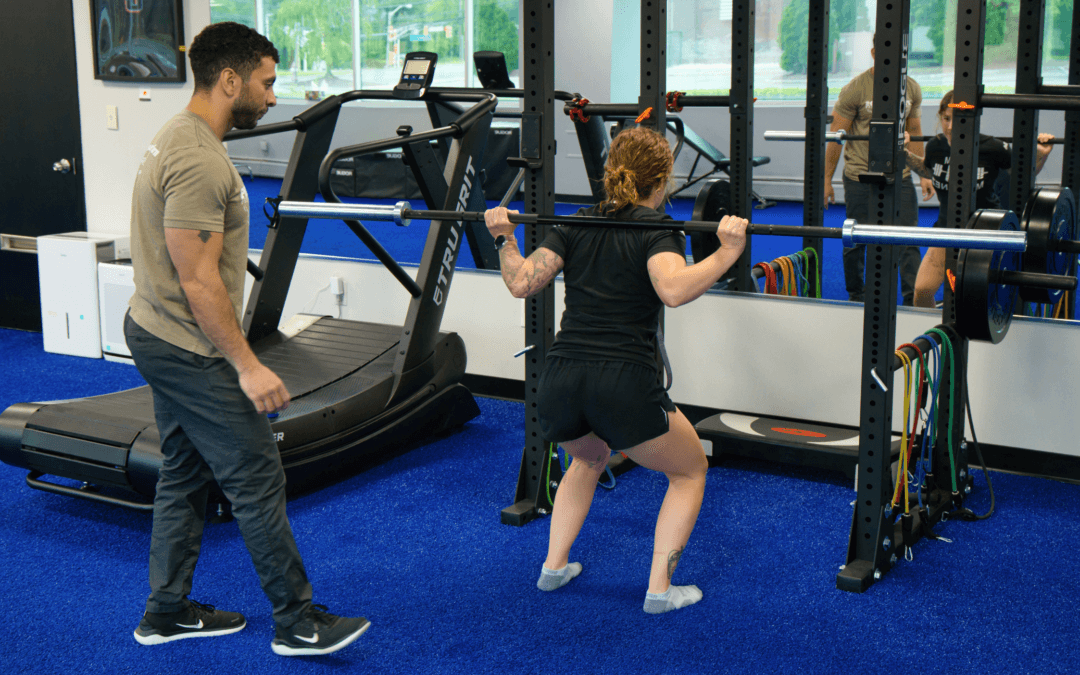
At Physiopros, we may use dynamometer strength testing to measure how much force specific muscles can produce. This helps us compare the injured side to the non-injured side instead of guessing based on how the athlete feels.
This matters because athletes can compensate without realizing it.
For example, an athlete may squat, jump, or land while quietly relying more on the non-injured leg. Without objective testing, those differences can be easy to miss.
VALD ForceDecks and ACL Rehab
VALD ForceDecks are force plates that measure how your body produces, absorbs, and distributes force.
During ACL rehab, this can be especially helpful because jumping and landing are major parts of returning to sport.
ForceDecks can help assess:
- Jump height
- Peak force
- Power output
- Landing strategy
- Left-right asymmetry
- Balance
- Force distribution
- Rate of force development
In simple terms, ForceDecks help us see what the eye may miss.
An athlete may look like they are jumping evenly, but the data may show one leg is doing more work. Another athlete may feel ready, but the numbers may show reduced power or poor force absorption on the injured side.
That information helps us build a smarter plan.
Range of Motion and Mobility Matter Too
Strength is important, but mobility also plays a major role.
If the knee does not fully straighten or bend well, the athlete may compensate during running, squatting, jumping, or landing. In addition, limitations at the hip, ankle, or spine can affect how the knee handles stress.
During ACL rehab, range of motion testing may include:
- Knee extension
- Knee flexion
- Hip mobility
- Ankle mobility
- Side-to-side differences
When mobility is limited, the body often finds another way to move. Over time, that can affect performance and confidence.
Sport-Specific Testing Makes Rehab More Real
Every sport demands something different.
A soccer player needs sprinting, cutting, deceleration, and change of direction. A basketball player needs jumping, landing, acceleration, and contact tolerance. A runner needs single-leg strength and load tolerance. A lifter needs strength, control, and confidence under load.
Because of this, ACL rehab should eventually look more like the athlete’s sport.
Sport-specific testing may include:
- Jumping
- Landing
- Hopping
- Cutting
- Deceleration
- Acceleration
- Change of direction
- Reactive drills
- Running progressions
- Position-specific movements
This helps bridge the gap between rehab exercises and real sport demands.
How Testing Changes the Plan
The best part of return-to-sport testing is that it gives us direction.
If testing shows quad weakness, we can focus on strength. If ForceDecks show landing asymmetry, we can work on single-leg control and force absorption. If power output is low, we can build more explosive strength. If cutting looks hesitant, we can progress agility and confidence gradually.
Instead of saying, “Keep doing rehab,” we can be more specific.
That may look like:
- More single-leg strength work
- Better landing mechanics
- Plyometric progressions
- Hip and glute strengthening
- Deceleration training
- Balance work
- Sport-specific conditioning
- Return-to-practice progressions
This makes ACL rehab feel clearer and more purposeful.
Confidence Is Part of Recovery
Returning after an ACL injury can feel mentally challenging.
Many athletes wonder:
“Can I trust my knee?”
“Am I strong enough?”
“What if I get hurt again?”
That hesitation is completely normal.
Objective testing can help because it replaces some of the uncertainty with real information. If the numbers look good, the athlete may feel more confident. If the numbers show deficits, the athlete gets a clear plan instead of vague fear.
At Physiopros, we want athletes to feel prepared, not rushed.
ACL Rehab at Physiopros Performance Rehab
At Physiopros Performance Rehab in Parsippany, NJ, we take a personalized approach to ACL rehab and return-to-sport testing.
Your plan may include:
- Physical therapy evaluation
- Strength testing
- Range of motion testing
- Manual therapy
- Mobility work
- Quad and hamstring strengthening
- Hip and glute strengthening
- Balance training
- Plyometrics
- Running progressions
- Cutting and deceleration drills
- VALD ForceDecks testing
- Dynamometer testing
- Sport-specific rehab
- Injury prevention strategies
We work with athletes and active individuals across Parsippany, Morris County, Northern NJ, and nearby areas who want more than a generic rehab plan.
The goal is not just to return.
The goal is to return with strength, control, confidence, and a better understanding of your body.
When Should You Schedule Return-to-Sport Testing?
Return-to-sport testing is usually most important in the later stages of ACL rehab, but testing can also help track progress along the way.
You may benefit from testing if:
- You are recovering from an ACL injury
- You had ACL reconstruction surgery
- You are preparing to run again
- You are starting jumping or plyometrics
- You are returning to cutting or agility
- You are getting close to practice
- You feel nervous about returning
- You want objective progress data
- You want a clearer plan before full competition
If you are not sure where you are in the process, a physical therapy evaluation is a great place to start.
Final Thoughts
ACL rehab is about more than healing the knee.
It is about rebuilding the athlete.
That means restoring strength, mobility, balance, power, landing control, sport-specific movement, and confidence. It also means making return-to-sport decisions with better information instead of guessing.
At Physiopros Performance Rehab in Parsippany, NJ, we use objective testing and a movement-based approach to help athletes understand where they are and what they need next.
If you are recovering from an ACL injury, you deserve more than a timeline.
You deserve a plan built around your body.
Ready to Test Your Readiness?
If you are working through ACL rehab or preparing to return to sport, training, running, lifting, or competition, our team can help.
Book an appointment at Physiopros Performance Rehab in Parsippany, NJ.
Call Physiopros Performance Rehab at (973) 265-8621 or request an appointment online by clicking here.
Also, make sure to follow us on social media:
Instagram: https://www.instagram.com/physioprospt/?hl=en
Facebook: https://www.facebook.com/physioprospt0
TikTok: https://www.tiktok.com/@physioprospt?_t=8lfj7ogbgam&_r=1.