Cupping Therapy Benefits for Pain, Mobility, and Recovery
At Physiopros Performance Rehab, we work with a lot of people who feel stuck because of tight muscles, soreness, stiffness, or pain that keeps coming back.
Maybe your neck feels locked up after sitting at work all day. Maybe your back feels tight every time you lift. Maybe your shoulders feel restricted during workouts. Maybe your legs never fully recover between training sessions.
That is where cupping therapy can be a helpful part of your treatment plan.
At our clinic in Parsippany, NJ, we use cupping therapy as part of a modern, movement-based approach to physical therapy and recovery. Our goal is not just to help you feel better for a day. Our goal is to help you move better, recover better, and understand what your body needs long term.
What Is Cupping Therapy?
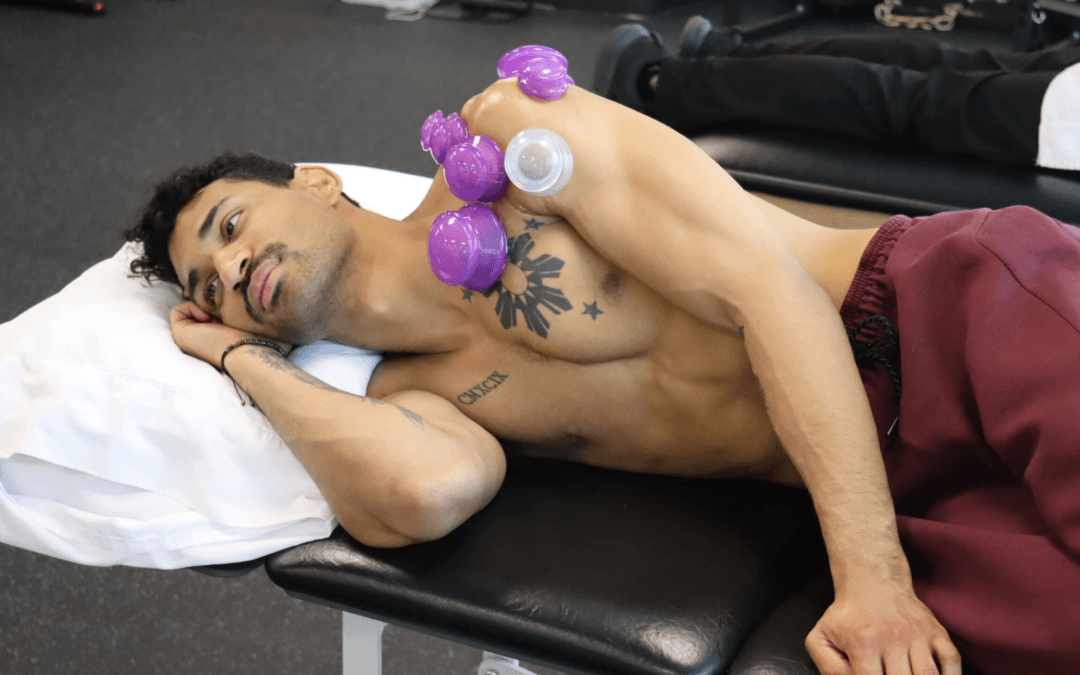
Cupping therapy uses special cups placed on the skin to create suction. This suction gently lifts the skin and underlying soft tissue, creating a pulling effect instead of the pressure used in traditional massage.
That makes cupping different from many other hands-on treatments. Instead of pressing down into tight muscles, cupping helps decompress the tissue.
We use cupping therapy to help improve blood flow, reduce muscle tension, and support better movement in the areas that feel tight, sore, or restricted.
How Cupping Therapy Can Help With Pain
Pain often comes with muscle guarding, tightness, and irritation. When your body feels overloaded or stressed, muscles can tighten up as a protective response.
Cupping therapy may help reduce pain by improving circulation, decreasing soft tissue tension, and helping the nervous system calm down.
We often use cupping therapy for people dealing with:
- Neck pain
- Back pain
- Shoulder tightness
- Hip stiffness
- Leg soreness
- Muscle knots
- Overuse discomfort
- Post-workout soreness
Cupping is not a magic fix, and we do not treat it like one. If pain keeps coming back, we want to understand why. That means looking at how you move, how you train, what your daily habits look like, and what your body may be missing.
Cupping can help reduce discomfort, but the bigger goal is helping you build a body that can handle what you ask of it.
How Cupping Therapy Can Improve Mobility
Mobility is not just about stretching more.
In many cases, your body may feel stiff because your muscles and soft tissue are not moving as well as they should. As a result, everyday movements like rotating, reaching, squatting, bending, lifting, running, or playing your sport can start to feel restricted.
That is where cupping therapy can be helpful. By reducing soft tissue tension and encouraging better movement in tight areas, cupping may help your body feel less guarded and more comfortable moving through a fuller range of motion.
For active adults and athletes, this can be especially useful. After all, better mobility can make a big difference in how you train, recover, and perform.
Better mobility may help you:
- Move with less restriction
- Feel looser before training
- Recover better after workouts
- Reduce stiffness from sitting
- Improve shoulder, hip, or back movement
- Feel more comfortable during daily activities
However, mobility work is most effective when it is connected to movement. That is why, at Physiopros, we usually pair cupping with active movement, mobility drills, or strengthening exercises. Once the tissue feels better, we want to take advantage of that window and reinforce better movement patterns, strength, and control.
In other words, we do not just want you to feel looser on the table. We want that improved mobility to carry over into your workouts, your sport, your workday, and your daily life.
That is what makes the treatment more valuable.
Cupping Therapy for Recovery
Recovery is one of the biggest reasons people come to us for cupping therapy.
Athletes, lifters, runners, desk workers, and active adults all deal with muscle fatigue and soreness. When tissue feels tight or overworked, cupping may help promote circulation and support the body’s natural recovery process.
We may use cupping therapy after:
- Hard workouts
- Long runs
- Heavy lifting sessions
- Sports practices
- High-stress weeks: more information on the benefits for stress relief here.
- Long hours sitting at a desk
- Repetitive movement or overuse
But recovery is not just about doing one passive treatment. We look at the full picture.
Are you sleeping enough? Are you training too hard too often? Are you moving well? Are you strong enough for the activities you want to do? Are you giving your body enough time to adapt?
Cupping can support recovery, but the best results come when it is part of a complete plan.
What Does Cupping Feel Like?
Most people describe cupping as a pulling or tight sensation on the skin.
At first, the sensation may feel a little unusual, especially if you have never had cupping before. However, it should not feel sharp, extreme, or unbearable. Some areas may feel more sensitive than others, especially if the tissue is already tight, sore, or irritated.
As the cups stay in place, many people feel the area begin to relax. In some cases, we may keep the cups still. In other cases, we may gently move them or combine cupping with light movement, depending on your goals and how your body responds.
After treatment, it is common to see circular marks where the cups were placed. These marks are normal and usually fade over time. They may look intense, but they are not the same as bruises from an injury.
Most importantly, we always adjust the treatment to you. When we use cupping at Physiopros, we pay attention to your symptoms, comfort level, goals, and activity demands. That way, the treatment is not just something we do to you. It becomes part of a bigger plan to help you move better, feel better, and recover more effectively.
Who Can Benefit From Cupping Therapy?
Cupping therapy may be a good fit if you feel tight, sore, stiff, or restricted.
In many cases, we use it with:
- Active adults who feel limited by tight muscles
- Athletes recovering from training or competition
- Desk workers with neck, shoulder, or back tension
- People with recurring muscle knots
- Patients working through physical therapy
- Anyone looking to improve mobility and recovery
However, cupping can be especially helpful when combined with physical therapy because we can also assess why the tightness is happening in the first place.
For example, tight hamstrings may be connected to hip weakness. Similarly, shoulder tightness may be related to upper back mobility or lifting mechanics. In other cases, low back stiffness may be influenced by core control, hip mobility, or workload.
Ultimately, we do not just chase symptoms. Instead, we look for the reason those symptoms keep showing up.
Is Cupping Therapy Right for You?
Cupping therapy can be a great option if pain, stiffness, soreness, or limited mobility is getting in your way.
It may help you feel looser, move better, and recover more comfortably. But we believe the best results happen when cupping is part of a complete treatment plan that includes movement assessment, hands-on care, strength training, mobility work, and education.
At Physiopros Performance Rehab in Parsippany, we use cupping therapy to support the bigger goal: helping you move better, feel stronger, and get back to doing what you love.
For more information on cupping therapy, click here: Cupping Services at Physiopros.
Move Better, Feel Better, Recover Better
Cupping therapy is not just a trend to us. When used with the right plan, it can be a valuable tool for pain relief, mobility, and recovery.
Whether you are an athlete, active adult, desk worker, or someone who simply wants to move with less discomfort, we are here to help.
If you are looking for cupping therapy in Parsippany, Morris County, or Northern NJ, Physiopros Performance Rehab can help you move better, recover smarter, and feel more confident in your body.
Call Physiopros Performance Rehab at (973) 265-8621 or request an appointment by clicking here.
Also, make sure to follow us on social media:
Instagram: https://www.instagram.com/physioprospt/?hl=en
Facebook: https://www.facebook.com/physioprospt0
TikTok: https://www.tiktok.com/@physioprospt?_t=8lfj7ogbgam&_r=1.