Frozen Shoulder Physical Therapy vs. Waiting It Out.
Frozen shoulder creates a strange dilemma.
Your shoulder is painful and stiff, but you may have heard that it eventually “goes away on its own.”
So why go to physical therapy?
Why not simply wait?
The answer is more nuanced than saying that everyone with frozen shoulder needs months of aggressive therapy—or that everyone should just ignore it.
Frozen shoulder, also called adhesive capsulitis, can improve over time. However, the timeline can be lengthy, individual recovery varies, and research has challenged the old assumption that every untreated frozen shoulder eventually returns completely to normal.
Frozen shoulder physical therapy can be useful for managing stiffness, maintaining appropriate movement, strengthening the shoulder as symptoms allow, and helping you navigate the condition without turning every day into an experiment.
The important part is matching treatment to the stage and irritability of your shoulder.
What Actually Happens With Frozen Shoulder?
Frozen shoulder is characterized by increasing pain and restricted shoulder movement.
Unlike many shoulder problems where the person can move the arm farther when someone else assists them, adhesive capsulitis typically limits both active and passive motion.
That restriction may affect:
- Reaching overhead
- Reaching behind your back
- Putting on a jacket
- Washing or styling your hair
- Reaching into the back seat of a car
- Sleeping on the affected side
- Lifting
- Sports and workouts
The shoulder joint is surrounded by a capsule of connective tissue. With frozen shoulder, that capsule becomes painful and restricted, leading to a characteristic loss of motion. Physical therapists assess both pain and mobility to help distinguish it from other shoulder conditions that can produce similar symptoms.
The Case for Waiting
There is a legitimate reason people talk about waiting.
Frozen shoulder often improves with time.
One long-term observational study found that many untreated patients recovered substantial function and range of motion.
More recently, a randomized trial compared watchful waiting with physical therapy. Both groups improved significantly, and the researchers found no significant difference in patient-reported outcomes over 12 months. However, an important detail is that nearly all participants were offered and received intra-articular corticosteroid injections, meaning this was not a simple comparison of “do nothing” versus physical therapy in isolation.
So yes, waiting can be reasonable in some situations.
But “waiting” should not necessarily mean ignoring the shoulder.
The Problem With “It Always Goes Away”
For decades, frozen shoulder was often described as moving through predictable freezing, frozen, and thawing stages before eventually resolving completely.
The evidence is not that clean.
A systematic review examining the natural history of frozen shoulder found little support for the assumption that untreated frozen shoulder reliably progresses through those stages to complete recovery. Some people improved considerably, while others retained motion or functional limitations for years.
That is why blanket advice such as “just wait 18 months” may not be very helpful when you cannot sleep comfortably, put on a coat, reach a shelf, or exercise normally.
What Frozen Shoulder Physical Therapy Can Do
Physical therapy cannot guarantee that the condition resolves faster.
What it can do is give you a structured plan during a condition that can otherwise feel unpredictable.
A physical therapist may help with:
- Monitoring changes in range of motion
- Choosing appropriate exercises
- Maintaining strength where possible
- Modifying painful activities
- Using joint mobilization when appropriate
- Helping you avoid unnecessarily aggressive stretching
- Progressing toward normal daily and recreational activity
Research has found benefits from exercise and joint mobilization for shoulder range of motion and patient-reported outcomes, although the ideal treatment approach and dose remain subjects of ongoing research.
More Stretching Is Not Always Better
This is where many people get into trouble.
Your shoulder becomes stiff, so the natural response is to stretch it as hard as possible.
Then it hurts more.
So you stretch harder.
Frozen shoulder does not always respond well to that approach, particularly during a highly painful or irritable stage.
The intensity of your exercises should match how the shoulder behaves.
Early on, that may mean gentle movement through a tolerable range.
Later, as pain becomes less dominant and stiffness becomes the primary limitation, your program may gradually emphasize greater mobility and strengthening.
A physical therapist can help determine how much stress is appropriate instead of turning every session into a battle for five extra degrees of motion.
What Exercises Might Look Like
There is no universal frozen shoulder routine, but exercises may include movements such as:
Assisted Shoulder Elevation
Using the opposite arm, a wall, table, or stick can help the affected shoulder gradually explore overhead motion.
External Rotation
Rotation is commonly restricted with frozen shoulder. Gentle assisted rotation may be used within a comfortable range.
Wall Slides
Wall-supported movement lets you practice elevation while controlling how much load the arm takes.
Shoulder-Blade Exercises
Maintaining strength and control around the shoulder blade can help preserve function while the shoulder joint itself is limited.
Progressive Strengthening
As movement becomes more tolerable, strengthening may expand to rows, presses, carries, and other activities that prepare the arm for normal use.
NHS guidance similarly describes physiotherapy for frozen shoulder as potentially including stretching, strengthening, posture guidance, and strategies for restoring movement.
Where Joint Mobilization Fits
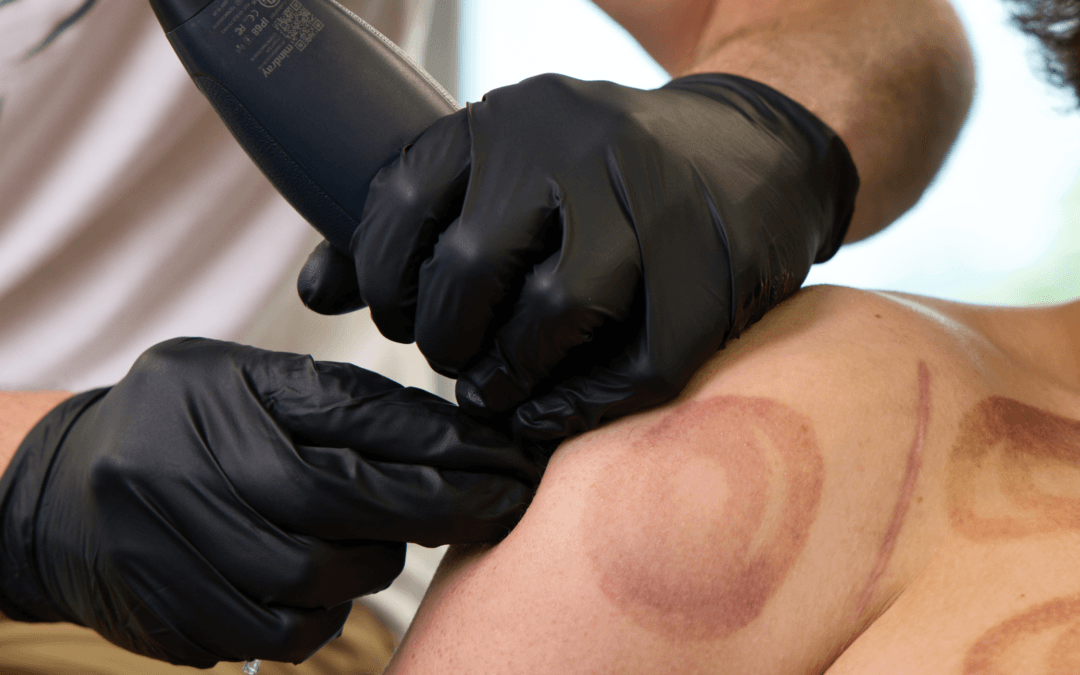
At Physiopros Performance Rehab, joint mobilization is one of the manual therapy techniques that may be used for conditions including frozen shoulder.
Joint mobilization involves controlled, graded movement of the joint rather than a high-velocity thrust. The goal is to address stiffness and help restore usable range when appropriate.
The important phrase is “when appropriate.”
If your shoulder is extremely painful and irritable, aggressive treatment may not be the best starting point.
As symptoms change, the treatment should change too.
Manual therapy should also support active rehabilitation rather than replace it.
When Waiting May Be Reasonable
A watchful approach may make sense when:
- The diagnosis is clear
- Symptoms are manageable
- You understand how to keep the shoulder moving appropriately
- Daily function remains acceptable
- You are improving
- You have guidance about when to seek further care
You may still benefit from an evaluation even if you decide not to attend regular physical therapy. Knowing what you are dealing with and having a home plan can remove a lot of uncertainty.
When Physical Therapy Becomes More Valuable
Consider frozen shoulder physical therapy when:
- You are unsure whether the problem is actually frozen shoulder
- Pain is affecting sleep
- You are steadily losing motion
- Dressing or reaching has become difficult
- You do not know which exercises to perform
- Your current stretching routine keeps causing flare-ups
- You want to continue exercising safely
- You are recovering after surgery or immobilization
- The shoulder is limiting work or sports
Physical therapy is particularly helpful when the goal is not simply “make the shoulder less stiff,” but to preserve your ability to function while the condition evolves.
Do You Need Imaging?
Not always.
Frozen shoulder is often diagnosed through history and physical examination. Imaging may be used when the clinician needs to rule out other problems, such as arthritis, fracture, or another shoulder condition.
If your pain followed a major injury, you cannot use the arm normally, you have significant weakness rather than stiffness, or your symptoms do not fit a typical pattern, additional medical evaluation may be appropriate.
Frozen Shoulder Care at Physiopros
Physiopros treats frozen shoulder within its orthopedic physical therapy services and also offers joint mobilization as one possible hands-on treatment for shoulder stiffness. Treatment plans may combine mobility, strengthening, manual therapy, and goal-oriented exercise according to the individual.
Patients work closely with a licensed physical therapist, with a trained aide assisting as needed.
Our goal is not to force your shoulder through an arbitrary timeline.
It is to help you understand what stage you are in, maintain what you can, restore what is ready to improve, and gradually rebuild the activities that matter to you.
Physical Therapy or Waiting: Which Is Right for You?
There is no need to turn frozen shoulder into a competition between physical therapy and time.
Time matters.
So does the way you manage that time.
Some people may improve with education, appropriate home movement, and monitoring. Others benefit from closer guidance, hands-on treatment, exercise progression, and help managing significant functional limitations.
The right approach depends on your pain, mobility, goals, medical history, and how the shoulder is progressing.
If a stiff, painful shoulder is interfering with your sleep, workouts, work, or daily activities, schedule an evaluation at Physiopros Performance Rehab in Parsippany, NJ. We work with patients throughout Morris County and Northern New Jersey to build individualized physical therapy plans based on function—not guesswork.
Call Physiopros Performance Rehab at (973) 265-8621 or request an appointment by clicking here.
Also, make sure to follow us on social media:
Instagram: https://www.instagram.com/physioprospt/?hl=en
Facebook: https://www.facebook.com/physioprospt0
TikTok: https://www.tiktok.com/@physioprospt?_t=8lfj7ogbgam&_r=1.
Submit a Comment