How VALD ForceDecks Help Athletes Return to Sport
Getting back to sport after an injury should not be based on guessing.
You might feel better. You might be pain-free. You might even be running, jumping, lifting, or practicing again. However, that does not always mean your body is fully ready for the speed, force, fatigue, and unpredictable movement that sport demands.
That is where VALD ForceDecks can make a major difference.
At Physiopros Performance Rehab in Parsippany, NJ, we use VALD ForceDecks as part of our Return To Sport Testing to help athletes and active individuals better understand their strength, power, balance, landing mechanics, and side-to-side differences.
Instead of relying only on how something looks or feels, ForceDecks give us objective data. That data helps us answer a very important question:
Are you truly ready to return?
What Are VALD ForceDecks?
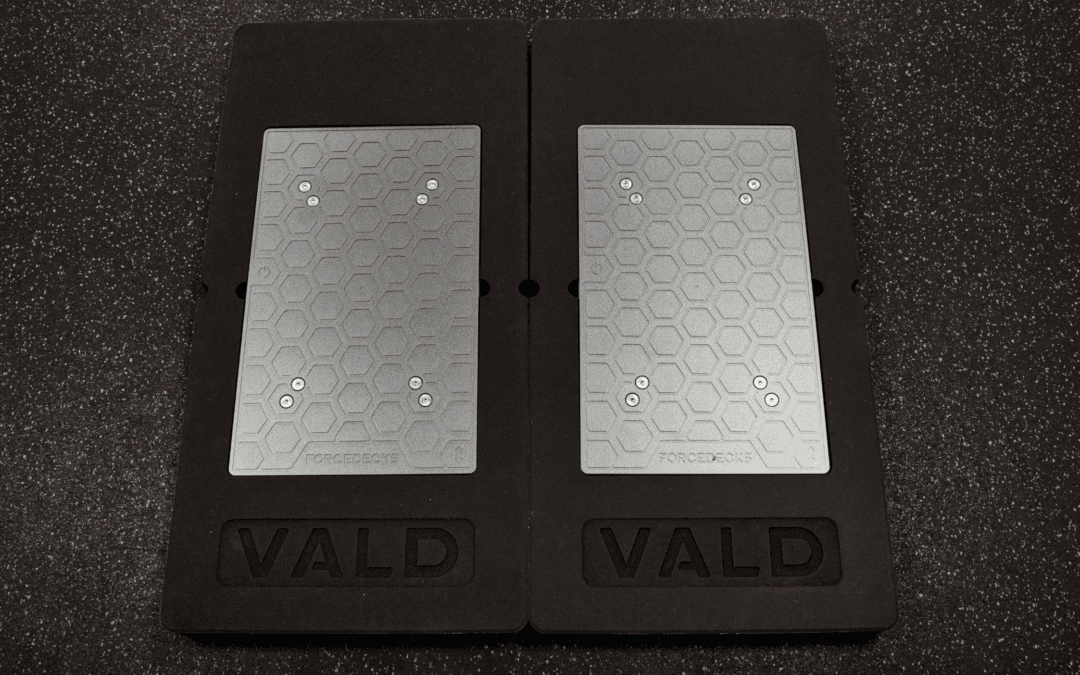
VALD ForceDecks are force plates that measure how your body produces, absorbs, and distributes force during different movements.
In simple terms, they help us see how much force you put into the ground and how your body handles that force.
During testing, an athlete may perform movements like jumps, landings, balance tasks, squats, or strength-based tests while standing on the plates. The system then gives us data about performance, symmetry, balance, power, and force production.
This matters because the eye can miss things.
An athlete may look like they are landing evenly, but the data may show that one leg is doing more work. Another athlete may feel strong, but testing may reveal a strength or power difference between sides. These details are especially important during return-to-sport decisions.
Why Return-to-Sport Testing Matters
Returning to sport is different from feeling better in daily life.
Walking without pain is great. Going up and down stairs comfortably is important. Getting through a workout without symptoms is a positive sign.
However, sport asks for more.
Athletes need to sprint, cut, jump, land, rotate, decelerate, accelerate, absorb contact, react quickly, and perform under fatigue. Because of that, return-to-sport decisions should look at more than pain.
A strong return-to-sport process may include:
- Strength testing
- Range of motion testing
- Jump testing
- Landing assessment
- Balance testing
- Power testing
- Sport-specific movement
- Anthropometrics
- Movement analysis
- Confidence and readiness
VALD ForceDecks help make this process more measurable.
Feeling Better Does Not Always Mean Ready
This is one of the biggest mistakes athletes make.
They assume that if pain is gone, the injury is fully behind them.
However, pain is only one part of the picture. Strength, mobility, control, balance, power, and confidence also matter. If one side is still weaker or less coordinated, the athlete may compensate without realizing it.
For example, after a knee injury, an athlete may naturally avoid loading the injured side. After an ankle sprain, they may land differently. After a hip injury, they may shift away from one leg. After shoulder rehab, they may lack the strength or control needed for throwing, pushing, pulling, or contact.
VALD ForceDecks help us identify these patterns more clearly.
What VALD ForceDecks Can Measure
VALD ForceDecks can help assess several important areas related to athletic performance and return-to-sport readiness.
Strength
Strength is one of the most important factors in returning to sport.
If one leg or one side of the body is not producing enough force, the athlete may not be ready for full-speed activity. ForceDecks can help measure force output during specific tests and compare how the body performs from side to side.
This gives us better information than simply asking, “Does it feel strong?”
Power
Power is how quickly your body can produce force.
This is important for jumping, sprinting, cutting, changing direction, and explosive sport movements. An athlete may have decent strength but still lack the power needed for competition.
ForceDecks can help show how well an athlete produces force during athletic movements.
Landing Mechanics
Landing is one of the most important parts of sport.
Whether you play basketball, soccer, volleyball, football, lacrosse, tennis, or pickleball, your body needs to absorb force well. Poor landing control, uneven loading, or side-to-side differences can affect both performance and confidence.
VALD ForceDecks can show how force is absorbed during landing and whether one side is taking more load than the other.
Asymmetry
Asymmetry means one side is performing differently than the other.
Some asymmetry is normal. However, larger differences can matter after injury or surgery. If one side is still underperforming, the athlete may need more rehab, strength training, or sport-specific progression before returning fully.
ForceDecks can help identify these differences with objective numbers.
Balance
Balance matters for almost every sport.
It affects cutting, landing, changing direction, controlling contact, and staying stable under pressure. ForceDecks can assess balance and force distribution, which helps us better understand how an athlete controls their body.
How VALD ForceDecks Help After Injury
After an injury, the body often protects itself.
That protection can show up as weakness, stiffness, hesitation, altered movement, or reduced confidence. Even after symptoms improve, those patterns may remain.
VALD ForceDecks help us see what is still happening below the surface.
For example, testing may reveal:
- One leg produces less force
- One side absorbs more impact
- Jump height has not returned
- Landing control is uneven
- Balance is limited
- Power output is reduced
- The athlete shifts away from the injured side
Once we identify those issues, we can build a more specific plan.
Instead of saying, “Keep strengthening,” we can say, “Your left side is still producing less force during landing, so we need to focus on single-leg strength, landing control, and deceleration.”
That is much more useful.
VALD ForceDecks and ACL Rehab
VALD ForceDecks can be especially helpful during ACL rehab and return-to-sport testing.
After an ACL injury or reconstruction, athletes often need to restore strength, power, landing mechanics, confidence, and limb symmetry before returning to sport. Even when the knee feels better, the athlete may still load one side differently.
ForceDecks can help assess:
- Jump performance
- Landing symmetry
- Peak force
- Power output
- Balance
- Side-to-side differences
- Force absorption
This helps the physical therapist make better decisions about what the athlete is ready for and what still needs more work.
However, ForceDecks are not used alone. At Physiopros, we combine this technology with clinical evaluation, dynamometer strength testing, range of motion testing, movement assessment, and sport-specific testing.
The goal is not just to pass one test.
The goal is to build a complete picture.
Why Objective Data Builds Confidence
Returning to sport can be mentally challenging. Even when the body is healing well, many athletes still wonder:
“Can I trust my knee?”
“Will my ankle hold up?”
“Am I strong enough?”
“What if I get hurt again?”
Objective testing can help reduce some of that uncertainty. When athletes see their numbers, they get a clearer picture of where they are. If the data looks strong, it can build confidence. If the data shows deficits, it gives them a clear direction instead of vague worry. That clarity matters. It helps athletes, parents, coaches, trainers, and healthcare providers make more informed decisions.
How We Use VALD ForceDecks at Physiopros
At Physiopros Performance Rehab in Parsippany, NJ, VALD ForceDecks are part of a bigger return-to-sport testing process.
We do not rely on one number or one test. Instead, we look at the full athlete.
Your testing may include:
- Sport-specific testing
- Dynamometer strength testing
- Range of motion testing
- Anthropometrics
- Jump testing
- Landing assessment
- Balance testing
- Movement analysis
- VALD ForceDecks data
- Review of results
- Personalized next steps
This allows us to see how your body performs from multiple angles.
Sports-Specific Testing Matters
Every sport has different demands.
A soccer player needs cutting, sprinting, deceleration, and change of direction. A basketball player needs jumping, landing, agility, and repeated acceleration. A baseball player needs rotational power, shoulder control, and throwing tolerance. A runner needs load tolerance, single-leg control, and efficient mechanics. A powerlifter needs strength, bracing, and control under load.
That is why return-to-sport testing should match the athlete.
VALD ForceDecks give us valuable data, but that data becomes even more useful when paired with sport-specific movement.
At Physiopros, we want testing to reflect what you actually need to do in real life, training, or competition.
What Athletes Can Learn From Their Results
VALD ForceDecks testing can help athletes understand their body better.
Your results may show:
- Whether one side is stronger than the other
- How evenly you jump
- How evenly you land
- How much force you produce
- How well you absorb force
- How your balance compares side to side
- Whether your power output needs work
- Whether you are progressing over time
More importantly, those results help guide your plan.
If your data shows good strength but poor landing control, your plan may focus on deceleration, plyometrics, and single-leg landing drills. If your power output is limited, you may need more explosive strength training. If one side is consistently underperforming, your program may need more unilateral work.
VALD ForceDecks Are Not Just for Injured Athletes
Although VALD ForceDecks are extremely useful for return-to-sport testing, they can also help healthy athletes.
Testing can be used to:
- Establish baseline numbers
- Track strength and power
- Monitor fatigue
- Identify asymmetries
- Guide training
- Prepare for a season
- Improve performance
- Support injury prevention
For athletes in Morris County, Northern NJ, and surrounding areas, this gives access to performance testing that goes beyond a basic movement screen.
You do not need to be injured to benefit from objective data.
How ForceDecks Support Injury Prevention
Injury prevention is not about predicting every injury. No test can do that.
However, testing can help identify areas that may need attention.
If an athlete shows poor balance, uneven landing, reduced power, or side-to-side strength differences, those findings can guide smarter training. Instead of guessing what to work on, we can target the areas that matter most.
This may include:
- Single-leg strength
- Hip control
- Landing mechanics
- Deceleration
- Balance
- Plyometrics
- Mobility
- Core stability
- Sport-specific conditioning
The goal is to build a body that can handle the demands of sport more consistently.
Why Local Athletes Choose Physiopros
At Physiopros Performance Rehab, we work with athletes and active individuals who want more than generic rehab.
Our approach is personalized, movement-based, and performance-focused. We combine hands-on care, strength training, mobility work, movement assessment, and advanced testing to help athletes move better and return with more confidence.
Our team works with athletes from many sports, including soccer, baseball, basketball, football, lacrosse, wrestling, volleyball, pickleball, tennis, CrossFit, powerlifting, dance, martial arts, and running.
If you are in Parsippany, Morris County, Northern NJ, or nearby areas, our Return To Sport Testing can help you better understand where you are and what your body needs next.
When Should You Schedule Testing?
You may benefit from VALD ForceDecks testing if:
- You are returning after an injury
- You had surgery and want objective progress data
- You are recovering from an ACL injury
- You are dealing with recurring ankle, knee, hip, or shoulder issues
- You want to know if one side is still weaker
- You feel nervous about returning to sport
- You want baseline performance numbers
- You want to improve jump, landing, balance, or power
- You are preparing for a season
- You want a more data-driven rehab plan
If you are unsure whether testing is right for you, a physical therapy evaluation is a great place to start.
In Conclusion
Returning to sport should be based on more than time, pain level, or guesswork.
VALD ForceDecks help athletes and physical therapists measure strength, power, balance, landing mechanics, and asymmetry with objective data. That information can reveal what the eye may miss and help guide a smarter plan.
At Physiopros Performance Rehab in Parsippany, NJ, we use ForceDecks as part of a complete Return To Sport Testing process that also includes sport-specific testing, dynamometer strength testing, range of motion, anthropometrics, and movement analysis.
The goal is simple: help you return to sport with more confidence, better information, and a plan built around your body.
Ready to Test Your Readiness?
If you are preparing to return to sport, training, lifting, running, or competition, VALD ForceDecks testing can help you make smarter decisions.
Book an appointment at Physiopros Performance Rehab in Parsippany, NJ.
Call Physiopros Performance Rehab at (973) 265-8621 or request an appointment online by clicking here.
Also, make sure to follow us on social media:
Instagram: https://www.instagram.com/physioprospt/?hl=en
Facebook: https://www.facebook.com/physioprospt0
TikTok: https://www.tiktok.com/@physioprospt?_t=8lfj7ogbgam&_r=1.