Manual Therapy vs Massage: What’s the Difference?
What Is Manual Therapy?
What Is Massage?
Massage is a hands-on technique that usually focuses on soft tissue relaxation, stress reduction, and general muscle tension. A massage therapist may use kneading, gliding pressure, compression, or rhythmic strokes to help muscles feel looser and more relaxed.
Massage can be helpful for:
- General muscle soreness
- Stress relief
- Relaxation
- Mild muscle tightness
- Temporary relief from tension
- Recovery after activity
For many people, massage feels great. It can help reduce stress and provide short-term relief from tight muscles. However, if you have recurring pain, weakness, joint stiffness, or an injury that keeps coming back, massage alone may not be enough.
The Main Difference: Relief vs Root Cause
The easiest way to understand the difference is this:
Massage often focuses on relief.
Manual therapy focuses on relief plus function.
That does not mean one is “good” and the other is “bad.” They simply have different goals.
For example, let’s say your lower back feels tight after sitting all day. A massage may reduce the tightness temporarily. However, if the real issue is poor hip mobility, weak glutes, limited core control, or repeated sitting stress, the tightness may return quickly.
With manual therapy, a physical therapist looks at the full picture. They may treat the low back, hips, or surrounding tissue, but they also assess how you bend, squat, walk, sit, and move. Then they build a plan that addresses the reason your back keeps tightening up.
Manual Therapy Is Part of a Bigger Plan
One of the biggest misconceptions about manual therapy is that it works best by itself.
At Physiopros Performance Rehab, manual therapy is used to create a window of opportunity. If a joint feels stiff, a muscle feels guarded, or a movement feels painful, hands-on care can help calm the area down and improve motion.
Then, once your body moves better, we use targeted exercise to help you control that new motion.
A treatment plan may include:
- Manual therapy to improve mobility
- Strength training to build support
- Mobility drills to maintain range
- Movement retraining to improve mechanics
- Education to manage symptoms outside the clinic
This matters because passive relief often fades if the body does not learn a better way to move.
Massage Can Feel Good, But It May Not Change the Pattern
Massage can absolutely help. However, if your symptoms keep coming back, there is usually a reason.
Maybe your neck gets tight because your upper back is stiff. Maybe your knee hurts because your hip and ankle are not sharing load well. Maybe your shoulder keeps flaring up because your rotator cuff and shoulder blade muscles need better control.
In these cases, massage may reduce discomfort temporarily, but it may not change the movement pattern causing the issue.
That’s why many people say, “I feel better after massage, but the pain always comes back.”
If that sounds familiar, you may need a more complete approach.
Manual Therapy vs Massage: How the Goals Differ
Massage usually focuses on:
- Relaxation
- Stress reduction
- General muscle tension
- Circulation
- Temporary soreness relief
Manual therapy usually focuses on:
- Pain reduction
- Joint mobility
- Movement quality
- Tissue restriction
- Injury recovery
- Functional improvement
- Long-term symptom control
Both can be valuable. However, if your goal is to return to lifting, running, sports, work, or daily activity without recurring pain, physical therapy with manual therapy is usually the more complete option.
Manual Therapy Techniques Used in Physical Therapy
Manual therapy is not one single technique. It is an umbrella term for several hands-on approaches.
At Physiopros Performance Rehab, treatment may include:
Soft Tissue Mobilization:
Soft tissue mobilization targets muscles, fascia, tendons, and other tissues that may feel tight, restricted, or sensitive.
Joint Mobilization:
Joint mobilization uses controlled movements to improve joint motion when a joint feels stiff or limited.
Joint Manipulation:
Joint manipulation is a quick, controlled technique used when appropriate to restore motion and reduce restriction.
Myofascial Release:
Myofascial release focuses on fascia, the connective tissue that surrounds muscles and other structures.
Trigger Point Release:
Trigger points are sensitive spots in muscle tissue that can create tightness or refer pain elsewhere.
IASTM and Graston-Style Techniques:
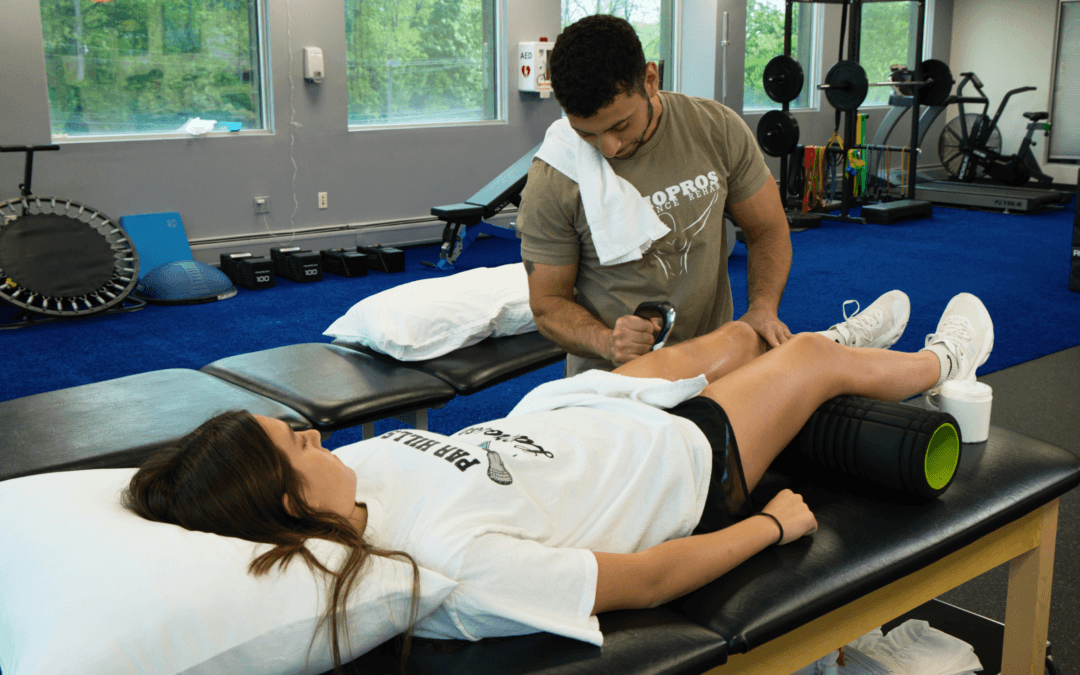
Instrument-assisted soft tissue mobilization uses specialized tools to address tissue restriction and improve mobility.
Each technique has a purpose. We choose what fits your body, symptoms, and goals.
When Massage May Be the Better Choice
Massage may be a great option if your main goal is relaxation or general tension relief.
You may benefit from massage if:
- You feel stressed and want to unwind
- You have general muscle soreness
- You want a wellness-focused recovery session
- You do not have a specific injury or movement limitation
- You feel tight but still move well without pain
Massage can be a helpful part of a broader self-care routine. If it helps you relax, sleep better, and feel more comfortable, that has value.
When Manual Therapy May Be the Better Choice
Manual therapy may be the better option if you want to understand and fix the reason pain keeps returning.
You may benefit from manual therapy if:
- Pain comes back after massage or stretching
- You have limited range of motion
- You feel pain during exercise or daily activity
- One side feels weaker or tighter
- You are recovering from an injury
- You have joint stiffness
- You want a plan, not just temporary relief
Manual therapy is especially useful when paired with movement assessment and corrective exercise.
Can Manual Therapy and Massage Work Together?
Yes. Massage and manual therapy do not need to compete.
Massage can help with stress, relaxation, and general muscle soreness. Meanwhile, manual therapy can help address movement restrictions, pain, and functional limitations.
However, if pain affects how you move, work, train, sleep, or perform, physical therapy is usually the best place to start. That way, you get a full evaluation and a plan that goes beyond symptom relief.
Common Myths About Manual Therapy and Massage
Myth 1: Manual Therapy Is Just a Fancy Massage
Manual therapy can include soft tissue work, but it also includes joint techniques, mobility assessment, movement retraining, and clinical decision-making.
Myth 2: If It Hurts More, It Must Be Working
More pain does not mean better results. Effective treatment should be purposeful, tolerable, and matched to your body’s needs.
Myth 3: Massage Fixes Every Tight Muscle
Tightness is often a symptom, not the root cause. A muscle may tighten because it is protecting a joint, compensating for weakness, or responding to repetitive stress.
Myth 4: Manual Therapy Should Be Passive
Manual therapy works best when the patient also participates through movement, strength, and education.
What to Expect During Manual Therapy at Physiopros
At Physiopros Performance Rehab in Parsippany, NJ, we start by listening. We want to know what hurts, what you’ve tried, and what you want to get back to doing.
Then, we evaluate how you move.
Depending on your symptoms, we may look at your strength, joint mobility, posture, balance, walking pattern, lifting mechanics, or sport-specific movement. From there, we choose the right combination of hands-on care and exercise.
A session may include:
- Movement assessment
- Soft tissue mobilization
- Joint mobilization or manipulation
- Trigger point release
- Myofascial release
- IASTM or Graston-style work
- Mobility drills
- Strength exercises
- Education for home and daily activity
Most importantly, your plan changes as you improve.
How to Know Which One You Need
Choose massage if your main goal is:
- Relaxation
- Stress relief
- General soreness reduction
- Short-term muscle tension relief
Choose physical therapy with manual therapy if your goal is:
- Understanding why pain keeps returning
- Improving mobility
- Restoring function
- Returning to lifting, running, sports, or daily activity
- Preventing future flare-ups
- Getting a personalized plan
If you are not sure, ask yourself this:
“Do I just want to feel better today, or do I want to understand why this keeps happening?”
If the answer is the second one, physical therapy is likely the better starting point.
Final Thoughts: Manual Therapy and Massage Both Help, But They Are Not the Same
Massage can help with relaxation, general tension, and short-term relief. Manual therapy, however, is part of a bigger physical therapy strategy designed to improve movement, reduce pain, and support long-term recovery.
At Physiopros Performance Rehab, we pair hands-on care with mobility, strengthening, education, and movement retraining so you can feel better and move better.
So if you’ve been getting massages but your pain keeps coming back, your body may be asking for a more complete plan.
Ready to Move Better and Feel Better?
If you’re dealing with recurring pain, stiffness, or movement limitations, our team can help you figure out what’s really going on.
Book a session at Physiopros Performance Rehab in Parsippany, NJ
Call Physiopros Performance Rehab at (973) 265-8621 or request an appointment by clicking here.
Also, make sure to follow us on social media:
Instagram: https://www.instagram.com/physioprospt/?hl=en
Facebook: https://www.facebook.com/physioprospt0
TikTok: https://www.tiktok.com/@physioprospt?_t=8lfj7ogbgam&_r=1.