Ultrasound Guided Dry Needling: What’s Different?
Dry needling has become a popular treatment for people dealing with muscle tightness, trigger points, stubborn soreness, and movement restrictions. If you’ve ever had a tight calf that won’t loosen up, a shoulder that feels guarded, or a hip that keeps grabbing during workouts, you may have heard someone recommend dry needling.
But now, there’s another term showing up more often: ultrasound guided dry needling.
So what’s different?
Traditional dry needling uses a physical therapist’s anatomy knowledge, hands-on assessment, and patient feedback to guide treatment. Ultrasound guided dry needling adds real-time imaging, which allows the provider to see certain structures below the skin while treating the area.
That does not automatically mean one is always better than the other. Instead, each approach has a purpose.
At Physiopros Performance Rehab in Parsippany, NJ, we believe dry needling works best when it supports a complete physical therapy plan. The goal is not just temporary relief. The goal is better movement, strength, mobility, and long-term recovery.
What Is Dry Needling?
Dry needling is a treatment technique used by trained healthcare providers to address muscle tension, trigger points, pain, and movement limitations.
During treatment, a thin needle is inserted into specific areas of muscle or soft tissue. These areas may feel tight, tender, or restricted. The goal is to create a response in the tissue that helps reduce muscle guarding, improve blood flow, decrease sensitivity, and support better movement.
The word “dry” simply means no medication is injected.
Dry needling may be used for:
- Muscle tightness
- Trigger points
- Sports injuries
- Overuse injuries
- Tendon-related pain
- Shoulder restrictions
- Hip tightness
- Calf or hamstring tension
- Recovery after repetitive training
- Movement limitations
However, dry needling is not just about “releasing a knot.” A good physical therapist uses it as part of a bigger plan that may include movement assessment, strengthening, mobility work, manual therapy, and education.
What Is Ultrasound Guided Dry Needling?
Ultrasound guided dry needling is dry needling performed with the help of ultrasound imaging.
Ultrasound uses sound waves to create a live image of structures under the skin. This allows the provider to see certain muscles, tendons, joints, and nearby tissues in real time.
In simple terms, ultrasound gives the clinician a visual guide.
Instead of relying only on touch and anatomy knowledge, the provider can also use imaging to help identify the target area and guide the needle more precisely.
This can be especially useful when treating deeper structures, more complex anatomy, or areas where accuracy is especially important.
Traditional Dry Needling vs Ultrasound Guided Dry Needling
Both traditional dry needling and ultrasound guided dry needling can be valuable. The main difference is how the provider locates and treats the target tissue.
Traditional Dry Needling
Traditional dry needling relies on:
- Anatomy knowledge
- Hands-on assessment
- Movement testing
- Symptom behavior
- Patient feedback
- Clinical experience
The physical therapist feels for areas of restriction, tenderness, or trigger points. Then they treat the area based on exam findings.
This approach can work very well, especially for more accessible muscles and common trigger point patterns.
Ultrasound Guided Dry Needling
Ultrasound guided dry needling adds imaging to the process.
This may help the provider:
- Visualize deeper tissues
- Confirm the target area
- Improve needle placement
- Avoid nearby sensitive structures
- Better understand the tissue being treated
The goal is not to make treatment more complicated. The goal is to make it more specific when specificity matters.
Is Ultrasound Guided Dry Needling Always Better?
Not always.
In fact, this is one of the biggest misconceptions.
Ultrasound guided dry needling can be helpful in the right situation. However, that does not mean every patient needs it. In many cases, traditional dry needling may still be appropriate and effective.
So, the better question is not, “Which one is better?”
Instead, the better question is, “Which one fits your body, your symptoms, and your goals?”
For example, if a muscle is easy to assess and treat with traditional dry needling, ultrasound guidance may not be necessary. On the other hand, if the target area is deeper, harder to locate, or close to structures that require extra precision, ultrasound guidance may offer an advantage.
Ultimately, this is why a physical therapy evaluation matters. Rather than guessing, your therapist can assess your movement, symptoms, and treatment goals to determine which approach makes the most sense for you.
Why Precision Matters
The body is not simple.
Muscles, tendons, nerves, blood vessels, joints, and connective tissue all sit close together. In some areas, the target muscle may be easy to reach. In other areas, the anatomy may be more layered.
Precision matters because dry needling should be specific.
If a patient has recurring hip tightness, the issue may involve the glutes, hip flexors, deep rotators, adductors, core control, or movement mechanics. If a runner has calf tightness, the issue may involve the gastroc, soleus, Achilles tendon, foot mechanics, training volume, or strength deficits.
In those cases, dry needling may help calm the tissue, but the larger plan still needs to address why the tissue became irritated in the first place.
What Conditions May It Help With?
Ultrasound guided dry needling may be considered for certain musculoskeletal issues, especially when precision is important.
It may be used for cases involving:
- Deep muscle trigger points
- Tendon irritation
- Chronic muscle tightness
- Overuse injuries
- Sports-related restrictions
- Hip or shoulder limitations
- Calf and Achilles-related symptoms
- Areas that are difficult to assess by touch alone
- Symptoms that have not improved with basic stretching or massage
However, symptoms alone do not determine whether dry needling is appropriate. A full evaluation helps determine whether the treatment fits your situation.
Two people may both feel shoulder tightness, but one may benefit from dry needling while the other may need rotator cuff strengthening, thoracic mobility, or better shoulder blade control.
That’s why guessing is not the best strategy.
Why Dry Needling Works Best With Movement
Dry needling should not be the entire plan.
It should be one tool within the plan.
Many people feel looser after dry needling. That can be a great starting point. However, feeling looser is not the same as fixing the reason the tightness happened.
For example, if your hip feels tight because your glutes are not doing enough work, dry needling may reduce the tight feeling temporarily. But unless you strengthen the hip and improve movement control, the tightness may return.
That is why dry needling works best when followed by:
- Mobility exercises
- Strength training
- Movement retraining
- Sport-specific drills
- Load management
- Home exercises
In other words, dry needling may help open the door. Movement helps you walk through it.
What Makes Ultrasound Guidance Different for Active Adults?
Active adults usually want more than temporary relief.
They want to get back to lifting, running, golfing, hiking, playing pickleball, training, working, and living without constantly worrying about flare-ups.
Ultrasound guided dry needling may be useful when a more specific approach is needed. However, the biggest benefit still comes from pairing treatment with a plan that builds capacity.
Capacity means your body can handle the demands you place on it.
For active adults, that may mean improving:
- Strength
- Mobility
- Tendon tolerance
- Balance
- Coordination
- Recovery
- Movement quality
- Training progressions
The goal is not just to reduce symptoms. The goal is to help your body become more resilient.
What to Expect During Ultrasound Guided Dry Needling
If ultrasound guided dry needling is appropriate, the provider will usually begin by identifying the area being treated and explaining the process.
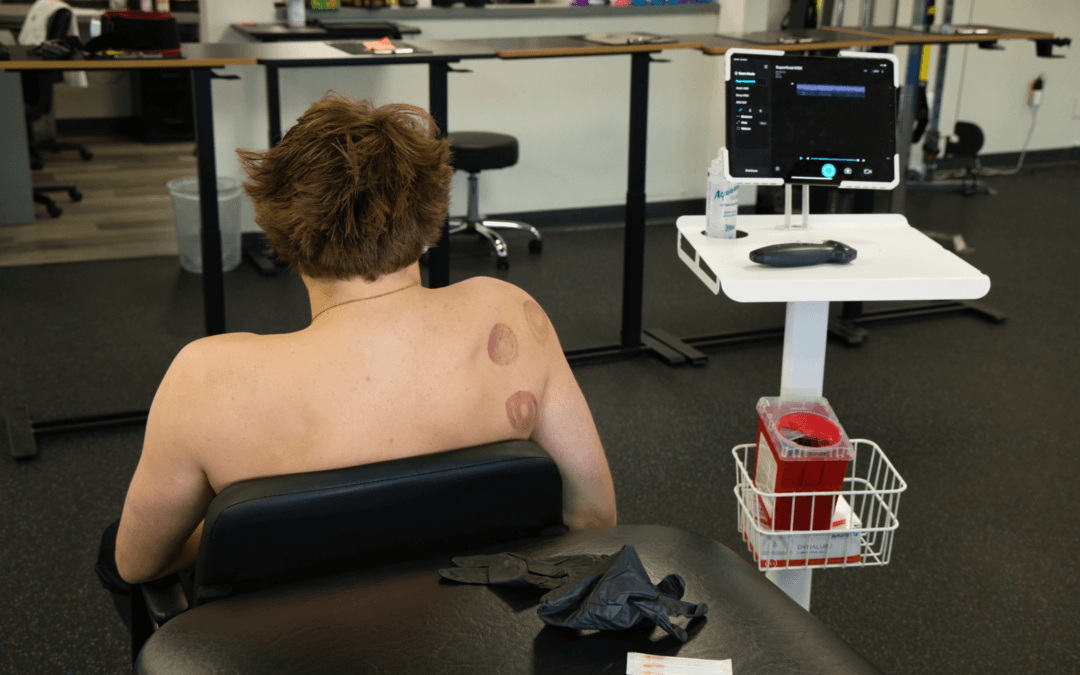
The ultrasound probe is placed on the skin with gel, which helps create a clear image. The provider then uses the ultrasound image to view the target tissue and guide the treatment.
During treatment, you may feel:
- A small prick
- Pressure
- A deep ache
- A muscle twitch
- Temporary soreness
- A sense of release afterward
The sensation can vary depending on the area being treated and your sensitivity level.
Afterward, mild soreness is common. Many people compare it to post-workout soreness. Your therapist may then guide you through mobility work, strengthening, or movement drills to reinforce the treatment.
Is Ultrasound Guided Dry Needling Safe?
When performed by a trained healthcare provider, dry needling is generally considered safe for many patients. Ultrasound guidance may provide extra visual information that helps guide treatment in certain areas.
However, dry needling is not right for everyone.
Your provider should review your medical history, symptoms, medications, comfort level, and treatment goals before deciding whether it fits your plan.
Dry needling may not be appropriate for everyone, especially in certain cases involving:
- Needle fear
- Certain bleeding disorders
- Some medications
- Skin infection near the treatment area
- Certain medical conditions
- Pregnancy-related considerations
- Recent surgery in the area
This is why a proper evaluation and conversation matter before starting.
Traditional Dry Needling May Still Be the Right Choice
It is easy to assume newer always means better.
However, traditional dry needling can still be very useful when performed by a skilled clinician. If the target tissue is easy to identify and the treatment goal is clear, ultrasound guidance may not be needed.
Traditional dry needling may be appropriate when:
- The target muscle is easy to assess
- Symptoms match a clear trigger point pattern
- The patient responds well to dry needling
- The area does not require deeper visualization
- The treatment is part of a larger movement-based plan
Again, the key is not the tool. The key is clinical reasoning.
How to Know Which Approach You Need
The best way to know whether traditional or ultrasound guided dry needling is right for you is to start with a physical therapy evaluation.
Your therapist should assess:
- Where you feel symptoms
- What movements trigger symptoms
- Your strength
- Your mobility
- Your movement patterns
- Your training or work demands
- Your injury history
- Your response to previous treatments
- Your goals
From there, the treatment plan should be built around what your body actually needs.
Why Physiopros Takes a Complete Rehab Approach
At Physiopros Performance Rehab in Parsippany, NJ, we believe physical therapy should be personalized, active, and goal-focused.
That means we do not rely on one technique to solve every problem. Instead, we combine the right tools based on your evaluation, symptoms, goals, and progress.
Your plan may include hands-on care, dry needling, cupping, IASTM, manual therapy, joint mobilization, strengthening, mobility work, gait analysis, sport-specific rehab, or injury prevention strategies.
More importantly, your plan should make sense to you.
You should know why you are doing each treatment. You should understand what progress looks like. You should feel like your care is built around your body, not a generic checklist.
When Should You See a Physical Therapist?
Consider scheduling an evaluation if you notice:
- Muscle tightness that keeps returning
- Pain that limits workouts or daily life
- Stiffness that does not improve with stretching
- Recurring trigger points
- One side feeling weaker or tighter
- Symptoms that return after massage or rest
- Difficulty returning to sport or training
- Ongoing soreness after repetitive activity
- Uncertainty about whether dry needling is right for you
If you are in Parsippany, Morris County, Northern NJ, or nearby areas, getting assessed can help you stop guessing and start moving toward a clearer plan.
Final Thoughts
Ultrasound guided dry needling is different because it uses imaging to improve visibility and precision during treatment. For certain patients and certain tissues, that can be valuable.
However, it is not automatically better for everyone.
Traditional dry needling can still be effective. Ultrasound guidance can add precision when needed. But neither approach should stand alone.
The best results happen when dry needling fits into a complete physical therapy plan that includes movement assessment, strengthening, mobility work, education, and long-term progressions.
At Physiopros Performance Rehab in Parsippany, NJ, we focus on helping you understand your body, move better, and return to the activities that matter most.
Because the goal is not just temporary relief.
The goal is better movement, better confidence, and better long-term results.
Ready to Find Out What Your Body Needs?
If you’re dealing with recurring tightness, pain, stiffness, or movement limitations, our team can help you figure out what’s really going on.
Book a session at Physiopros Performance Rehab in Parsippany, NJ.
Call Physiopros Performance Rehab at (973) 265-8621 or request an appointment by clicking here.
Also, make sure to follow us on social media:
Instagram: https://www.instagram.com/physioprospt/?hl=en
Facebook: https://www.facebook.com/physioprospt0
TikTok: https://www.tiktok.com/@physioprospt?_t=8lfj7ogbgam&_r=1.